
 Apple Podcasts
 Spotify
 Youtube Music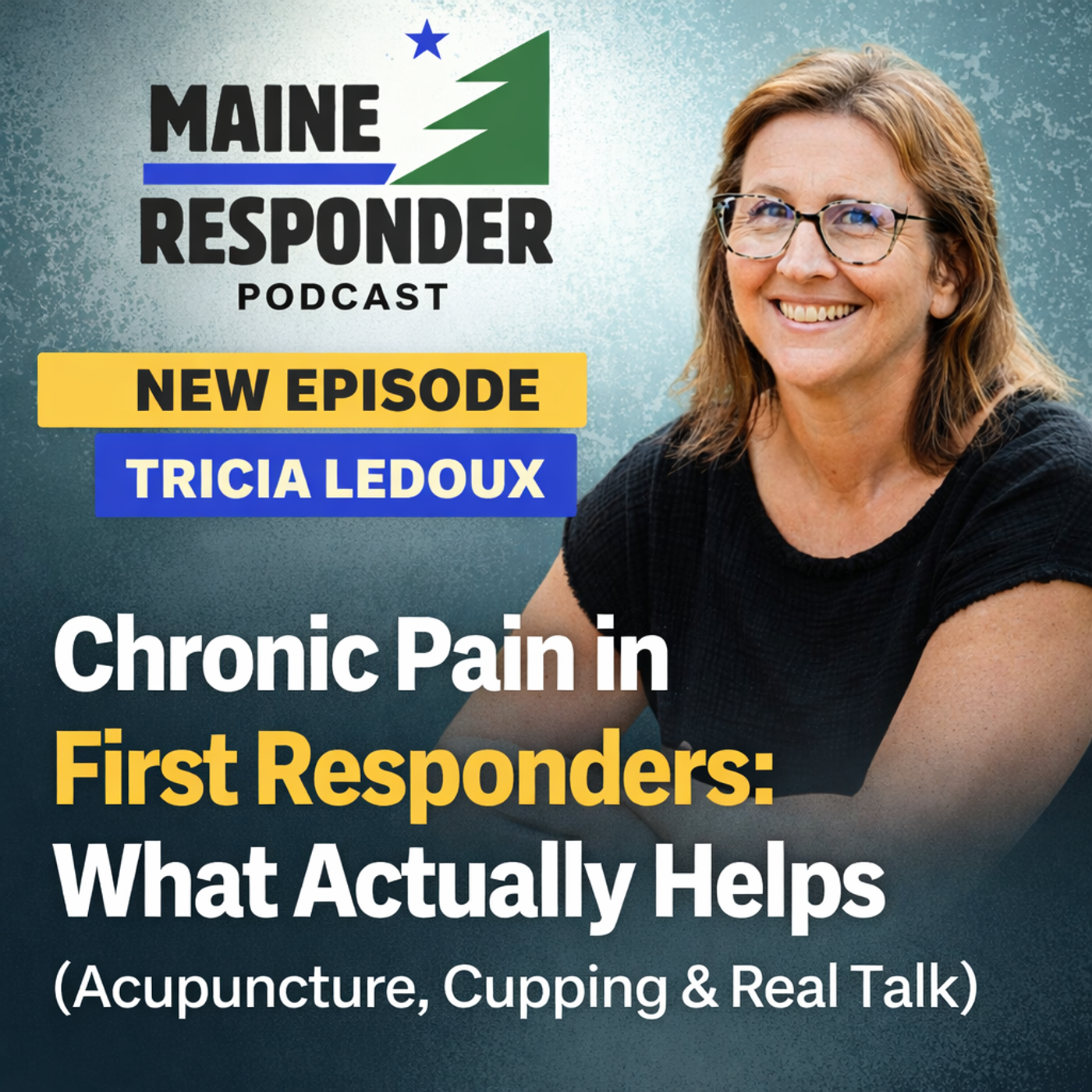
This episode of the Maine Responder Podcast takes on something most first responders deal with yet rarely talk about: chronic pain.
Not the generic advice. Not the “just stretch it out” version.
We get into the real experience—what it feels like to show up to work in pain, how it impacts your mindset, and why the culture often pushes people to ignore it.
Trish, a licensed clinical professional counselor working within a police department, shares her firsthand experience with chronic pain and what’s actually helped—from acupuncture and cupping to rethinking movement, recovery, and identity.
We talk about:
- Why first responders ignore pain until it gets worse
- The mental and emotional toll of chronic pain
- How pain impacts decision-making, patience, and performance
- The frustration of surface-level advice
- Alternative approaches like acupuncture and cupping—and why they work for some people
- The role of movement, awareness, and changing habits
This isn’t a checklist.
It’s a real conversation about what it takes to keep going—and doing it the right way.
🎧 Maine Responder Podcast
Real conversations about work, pressure, and the lives shaped by service.
Elliott: â right, we go. episode â of Main Responder. Billy's I'm back. How you doing, man? doing good. Yeah. Very good. Trish, noticed a social media handle. is that? You want to know the â behind? â you know, mean, if you want to say it was Trish the Dish, which I loved. â first question, like, well, what dish or how â we talking about dish? then I was like, you if we're talking dish, â what dish would I be? You know? But please, I would love that. That's a great question. I feel like the origin story is actually really boring. OK. But the looks I get from people these days when they see that handle, they're like, ooh. And I'm always like, really, it's not as exciting as it sounds. My friend in high school made me a mixed tape. And it just said, for Trish the Dish. I think because it rhymed. guess little did we know that there could be other connotations to it. Somebody I was coaching last week was like, well, you know what it means, right? â And was like, â no, really. And she was like, means you're a babe. â And was like, â I wonder if people are like, that's mighty egotistical of you. I had a feeling there was something to it. Yeah, still have the mixed state. So what was the genre? What do you think the genre was? Ooh, I mean the dish, go to like 90s R &B. Of course, that's exactly what it was, yes. Especially when it's a mix. That's what you're mixing. All right, I like that. if you were a... A dish, a food dish, what would you be? It might be like, I don't know the name of it. Well, it's like linguine and clam sauce that might be like slightly spicy. Ooh, fra diavolo? Yes, like a fra diavolo. What about you, Billy? Wow. That's deep. I had time to think, so I Yeah, you did. But there's a spicy element to mine, too. So what about you? Man, that's a tough question. Man, I'm going to say. the whole American buffet. â Jesus. No, I don't know. The dish. What dish would I be? Ronnie, you're back. We got Ronnie in studio too. What about you? What's I'm stuck. Going with lasagna. You know, your comfort food. You know what I mean? can just nestle up in you. know what mean? So that's Lasagna Works. I guess I'm kind of floating at the ribeye, broccoli, and mashed potatoes. Garlic mashed potatoes. I like that. With a good little chimichurri on top. A little bit of everything, but some good meat. Yep. Stick to your bones, but a little spice of life in there. All right. All right. Well, so â I'm just I'm a plate of nachos. That's it. Little cheesy, layered, spicy like, Trish, like you were talking about. I love nachos. nachos yesterday. Made it easy for me to come up with that. That is a good one. But all right, so we're here today with I never think of you as Patricia. Oh, gosh, you don't know me either. But you wrote that, I was like, oh, yeah, that's right. She's it asked for my full government name. Did it not? It full name. Yeah. So Trish, is it's interesting because you you work with us as our I don't even know what to call it right. We can use that term like a you know embedded social worker or whatever. in a sense it is but you're actually a licensed clinical professional counselor and for the police department community engagement specialist. So basically you're here to provide resources and you know. really just improve â the department's goal of mental health policing, right, and doing that in a better way. And you've done a lot even just in-house too. That's just kind of been light and cool and, you know, great to have you around. what's some of your other experiences, some of the other stuff you've done? Sure. for 11 years I was a â state, well, first, the state probation officer. â I â to that I have encompassed all the careers that people generally hate â or hate on. worker first, â probably the widely â position â in my career. â probation and â work â and I ran a domestic violence intervention program for â couple of years before that got too tough and decided to kind of moved in, moving into a space where I could use my clinical skills â It's â kind of a, in a â more energizing â way â for sure. â So yeah, so have a lot of great experience. Some that probably helps you understand the â of a police department too, but today â We're talking about something â right? â Chronic pain. Yeah, so I'm kind of intrigued to hear, what direction you want to go with this and why why pain sure â I? â Was last week on my ride â Right down to the PD. was like, have they they done an episode on chronic pain because I've been experiencing chronic pain via sciatic issues â since January, â â probably a lot longer. But it is really like I've never experienced chronic pain like that before. â And certainly don't consider myself the poster child â for pain. Other people have lived with chronic pain for longer. I guess my question becomes I don't know how they do that from my own personal experience â â started thinking about â would chronic pain because I know how I feel and I think about like â empathy piece what would it be like to be an officer whose responsibilities it is like â a wide array of responsibilities at any given moment having to â physically to something â kind of like not knowing and having to go into work each day thinking like, â god, how am going to be able to do this? And how taxing it can be to experience chronic pain and if it starts. kind of bleeding into other issues too, right? Impacting our mental health, substance use, just kind of like our social interactions with others. â So kind part â and parcel I â asked, like, you done this topic? And I think this topic, â you know, could be a lot of â first responders there â who listen, experience chronic pain every day. And just sometimes nice to â I think hear people talk about it in a way that's like validating because I'm for the opportunity to just be like to. â be able to suggest to people through this platform, like, before you start making suggestions, have you tried yoga? Have you tried stretching? Have you tried to just not say anything at all? And that might be my preference, do understand. â the suggestions overwhelmingly, I understand the care that's behind it, but the suggestions overwhelmingly I find sometimes frustrating or I feel isolated â actually. because people, I've seen like kind of a pity look, right? But I can tell it's like sympathy, but it's like, it automatically like makes me feel excluded because I'm now like this person with chronic pain and I can't do what other people do. I don't assume that my experience is universal. But that's why I thought like, â so there's just many reasons I thought like chronic pain might be a good topic, especially for first responders. â Yeah, I think it is. I've been dealing with back pain that I'm just â ignoring. â I mean, I went the you know, he was like, â do physical therapy. I did that once for like a tennis elbow. And I'm like, I'm not going to do that. like it just didn't seem. guess it just didn't seem like something I wanted to do. Maybe I should have done it. So what do you do? mean, you talk about yoga. Is it practice yoga? that? I said, do you do yoga? Do do? Yeah, exactly. Do I practice? Yeah. No, currently. Well, what's interesting about it, too, is that technically there's some things that are some interventions that are geared towards reducing chronic pain. But what I'm learning is that those interventions may not work for certain people or it only works temporarily in reducing pain, depending on what the chronic issue is. I'm going on like probably 10 weeks and substantially better than I was before. â doing some yoga movements, but certainly not yoga. I'm in PT, a different kind of PT than I was in before, practicing kind like really the basics. I'm back to the basics really. One thing that I'm reading everywhere is that you have to continue to move. You have to continue to move throughout your chronic pain because â resting may feel better, â isn't necessarily better for the rest of your body. People might experience chronic pain in more than one location, I can acknowledge that, but if you have chronic pain in one location, â it serving your body to â do anything at all? â So primarily, I say physical therapy, acupuncture. I'm on. medications right now to try to help me â â â heat. â that's primarily what I'm doing. what's offered the most, temporary â relief? â Has there been anything that you've tried? â Physical therapy has worked really well. tapes my back, that helps. â â Advil currently is my friend, long term Advil is â not our friend. â And Advil helps. And â I love acupuncture. â I'll not say that. â Billy and I have had about acupuncture. And â there's just â whole body â They left a needle in your head, right Billy? They did, yes. That was a fun one. We did talk about that. Yeah, acupuncture for me was â a big benefit and one of the grounding areas of my recovery from back pain as well. had two blown discs and same thing, you felt that same isolation of what can I do? I can't do anything. And you're right, people would be like, not gonna call Billy because he can't do this anyway. And it does, it sucks. So mentally that sucks. And the acupuncture thing, very funny, had my appointment. driving down the road and I go to scratch my head and I go whoa. Had a needle right in the top of my head, I'm glad I go into the grocery store with a needle in head though. Comedy relief. â Right, or â have you gone into the grocery store after having, â when they do the suction cups? â yeah. people are like, the? And this was back before cupping was â quote unquote cool. Yeah, but is it really that cool? mean, I was going to like, talk about that, because I think if you â if you consider our world first responders like, â you know, it's probably not the type. It's probably not the It's or â or cupping. â probably isn't. I bought one of those cups just to see. And I was like, I think sucking me I got I was like, that thing's in the corner collecting dust. â good for now until I have like somebody who's done it â but are things I think that are â probably awesome I you both know I'll try anything but â what really what is it I I look to both of you to kind of jump in on that â what would â you know â captain of the fire department for 20 something years who his idea of cupping is probably a lot like mine and it's a cup of bourbon or a cup of coffee. So what is that like? Can you explain there's a couple different avenues you can go with professionally. When you go to an acupuncturist, it's typically a glass cup. that gets inverted, they put a little alcohol swab inside it and then light it on fire and it kind of gives that little, you know, that magical look of flame coming out of the glass and they put it on your back. The flame is gone, but that increases suction and they adjust it on your skin to get the right amount of suction and they find your sweet spot. They'll track it, they'll just keep going up and down and... then they'll just leave it on one spot. What that does, it increases blood flow. So if you got a spot that's injured, there's, I would say dead blood or lack of circulation in that area. So not dead blood, but lack of circulation in that area. need movement. The cupping increases the movement to that area. So it's gonna draw out that inflammation and that damaged. body more or less and draw in new fresh lymphatic fluids, blood, and just create blood flow, create heat, and create space to get that out. And you're left with basically a hickey, a bruise, for a little bit of time in the shape of a circle. And sometimes, I I've had points where she had put a row of cups on each side, so my spine was lined on either side with these glass cups. So six to eight cups on either side of my spine going right down. And she just let me sit there for a few minutes, 10 minutes. and let it go and you do you feel great but. All right you feel what do you mean you feel great? You feel loose like it's a massage. Okay. Yeah almost like a massage but without that deep penetrating because sometimes with these injuries you can't do massage because that deep penetrating massage is gonna be bad for your. Paint this picture for me I guess this is what I wanted to get at right? want to go cupping. I'm gonna walk in is there music on? Is there like, is it, you know, a little bit of a seance? know what This is what I'm saying. â but I we're talking to â everybody else, you know? And yeah, â don't know I would, that's why I was I'm gonna buy one cup and try to figure it out with YouTube, you know? So is it very... â Calm, meditative, â hot stones, that's, think that's what people would to â Absolutely. think that's exactly it. â I mean, if somebody gets regular, I'm gonna say body work in terms of massage, I've only had cupping done in the context of getting a massage. And so already, like picture if you've ever received a massage, picture with the, know, like the... What's the, I can't remember, I don't, I can't remember the name of the instrument, right, but the, lots of ambient noise, calm environment. Like a harp? Kind of. Like the angels or? Right, yes. Yes. soft lighting maybe a candle or two set off to the side nice table massage table stretched out warm it's warm warm there's heat pads on it already take the heat pads off you lay down you'll even put some warm rocks on your back Deep thoughts with Billy Dries. me. right. All right. We got off on there. I know there's a lot more first responders doing this than probably admit. â but it's all kind of becoming, â front and center, But I guess the question is, does it work? I can't describe a level of relaxation that I achieve in any other way than when I have acupuncture. Like not only am I, because I can, â a lot people will say to me like, â you look. relaxed and little do they know that every fiber of my body is tense as hell and that I'm just sort of keeping it all in. And so it's kind of like the one of the opportunities where I'm just like, if anybody's ever had that experience where literally they can feel their shoulders actually climb down to where they're supposed to be. And so for me, that's kind of, that's one of the many benefits. I just think it's kind of wild that it treats a bunch of different issues that you can have. â been around â There's different things that they can do. They can hook up some of the needles to a stim machine. So it runs like a small electrical current in through the needles. Helps kind of like get more blood flow to the area. â Anybody who's considering acupuncture, if you've had dry needling, my acupuncturist is kind of snarky, â â considers dry needling to be kind of like the tougher cousin of acupuncture. but done by, as she put it, â less educated individuals, which is like, it's still done by physical therapists, but they're not acupuncturists, right? Like, so they took a class to do dry needling. So if you've had dry needling and you're like, â I've had that done, that worked really well. Think about, â like, dry needling and you get to nap for 45 minutes. â is anybody here against a nap? â you're dealing with this every day. â Right, pain every It probably impacts â your mood, what you're gonna do, what you can do. Right? Yeah, fair enough. I consider a lot of â first to be of similar ilk. Not everybody, I think, falls into this category. But there are a lot of type A's, what we consider â type personalities in law enforcement, which means â you're productive. â Part how you define yourself is in what you do and what you can accomplish in a day. â Not mention that â I think administration looks kindly on people just like hanging out. â Right? there's a part of the job that that is like being present in a car, you don't have to actually be â can see my quotes, but â doing nothing so to speak, â right? That's called like directed patrol. You're sitting there, your presence like is hopefully slowing down cars, but â if you have kind this personality where you're like, I gotta get stuff done. â And then you're suddenly like, whoa, â my God, like I'm getting, â a quarter of what I want to get done done. â So then, you know, I I kind of picture that can take a toll on how you define yourself. There might be some negative self-talk somebody has like, â you know, just about who we are not accomplishing these things. â feeling like, it's this kind of like cloud, I just describe it as like this cloud, â right, the Pooh, if everybody remembers that, like, it's just this kind of dark cloud. â this also all depends on the â frame of mind think people â kind of â as well, even getting into pain, but. â on the days that I am working with clients sitting in a chair, that means having to be like really present for... you know, about 50, 55, 60 minutes and being on and trying to like meet with people in that way. And by the end of the day, I'm exhausted, like exhausted. My social battery is probably like non-existent. And I was looking at research in preparation for this and... the social battery piece, particularly I looked at research about chronic pain in law enforcement. â so you're talking about individuals who â putting everything they have into their work. â then what does that leave for first responder families? You're not getting out and doing some of the things that you enjoy in part because â depending that â the issue where it's coming from, you can't. So then you're stuck at â home, If you've given everything you have to work, what's it like for families when you get home if your social battery is as low as mine? ooh, â do you let somebody know? I'm feeling it tonight. If you have young kids, â my child is â an adult, thankfully, because I not sure I would tolerate â having, my son was very energetic, and so how I would tolerate having really energetic child in a time where I just want to like lay down on the couch â kind of do nothing at all. â Is like, I don't know what it was like for you Billy when you had kind of your back issues and working. â Well, I that was â fortunate for â I wasn't law enforcement during that time, â but I a farm. â So trying to balance all that was very difficult. And like you said, I mean, that was my aha moment. It was laying on the floor when my youngest was cutting the hair on my legs, laughing, and I didn't know what she was doing. I look back and I'm like, yeah, this is great. yeah, you're just, you're at the will of everybody around you and you kind of have to be able to have a good communication with them and say, hey, I need space. last week, think, â because office is right next to the chief's, it was like, hey, come in here for a minute. And I'm like, yeah, hold on. â That'll more like two, â because have to get up carefully, â walk carefully, â and of like consider each step. Like there's nothing fast. â And not a slow person. Like I walk fast. I try to get like a lot done. And so like even having to slow down â is â OK, having remember I can â get off the floor from. â All these minor patterns in our bodies that we don't realize that we do that have a tremendous impact on us. I tend to â stand on leg. It's really ruined how I like to sit too. I to sit properly apparently. Like posture's supposed to be something. And â kind being in or around â responders for so long, it's also of this, if somebody doesn't want to talk about the pain that they're experiencing. â are they â shorter with their coworkers than they might normally be? â Leaving people to say like, what's going on with this person? My tolerance levels are, I laugh because â it's my self talk that is the most entertaining. But my tolerance levels are really low. And so I can only imagine. â in a kind of like frustrate what can be a frustrating job in terms of you never know who you're going to interact with and. what it would take in those interactions to just keep calm or keep composure when the, as I call it, window of tolerance, right? That's the therapeutic term. A window of tolerance when you're in pain is very small. And usually they say window of tolerance, you're gonna, â if you're, Charting outside of your window. You're gonna go either kind of hypo which is withdrawal shutting down Isolation where you're gonna go hyper and hyper â is Yelling, you know having the external reaction that might come across as like aggressive assertive â typically kind of a little over the top than what the situation might call for. And so then you kind of have, I think it's like this cyclone or snowball effect of chronic pain, depending on somebody's attitude. Are they, want to talk about being willing to try anything, right? Like are they gonna try something like, â mindful non-reactivity? Are they gonna try things like trying to focus on somatically, trying to focus on areas of their body where they're not in pain? I think it's really easy to also just sort of sit in the abscess what â our is and just bathe in And â that will not be helpful. So then. â as a way of getting out, is there substance use? What other mechanisms that may seem like they're working, but the negative consequences are too great at times? â are the other coping skills that people are using? And so then you have substance use. You have isolation. You have... â know, window of tolerance or smaller window of tolerance. It's just a really kind of a snowball or avalanche into dangerous territory. I'm just thinking of many times have we â had an officer that maybe was dealing with something and we just didn't know. do you recognize that stuff? Before it's â substance use, before it's too late. â that's interesting. And now, â I'm definitely that guy who's got some pain and I'm just really ignoring it. I think I'm doing what a lot of people would do. And to the point I do things a little bit different. just some of those little things that you for granted and â And I just say, I'm getting old, â and use that as the excuse, but it's, it's â so much deeper than that. guess I should probably go do something it, to be honest. But one of the things, Trish, you talk about, you know, you're dealing with this, You've been somebody who's avidly worked out since high school, I think. Right. how do you manage that with the pain? you also coach, right? I'm like, all right, she's in all this pain, but she's also at the gym, like getting down. So how does that balance? How does that work? Or not getting down? OK. Yeah. No, I still go to the gym because I think I said earlier that by all accounts, you got to continue moving. But you have to move differently. I heard this quote, I think it was last year, and it's been rattling around in my head, and I'd share it with clients because I think it's great. And then this happened, and I'm like, wow, Trisha, you really did not understand the meaning of this quote like you should have. And the quote is, choose rest before rest chooses you. And initially, I was like, yeah, it means take a rest day, right? Like, yeah, okay. I think it means a little bit more than that. And I fully admit that I got myself into this situation â because much like you, I was experiencing some pain and I was kind of like, this is just like, it's a consequence of working out as hard as I do, right? Like, â I just have to put more effort into mobility. I have to put more effort into strengthening my structural â like the smaller muscles that â stabilize us. â And I did that. did PT. And then I was like getting worse and getting worse. And I would not I would not stop. Like I started I probably started doing things differently a little too late. Like I should have really modified my workouts much earlier than I did. But I also am kind of like. hate to admit this, but anybody who knows me knows. But I'm just so hard headed. And in the gym I usually say I work harder, not smarter. â And I don't say that as a way of like, be like this kid. I say that in like a dope Homer Simpson kind of â â â Yeah, coaching's been really tough. I've been contemplating kind of like taking a break from coaching because I can't even do most of the movements right now that I would be coaching. So like in order to demonstrate, I'd, you know, it would not be good. I'd probably fall back in terms of progress. But yeah, I know I've had to kind of reassess what working out looks like or even goals. Like, having a goal of just like, you know what, I want to be able to walk a lot when I'm 85. I want to be in like the some sort of a â village or, you know, center for seniors. And I want to be like the fast walking champion, â perhaps. But I still would just like to be able to walk. And as I get older, I kind of like get more in touch with those long term goals as opposed to the short term. like especially depending on where you work out, if it's kind of like a community style. functional fitness, like CrossFit, that it's really hard for me to â my eyes â of straight forward and stay focused on what I want to do, because I'll â Sammy over there squatting â PR, and I'm like, I could put a few more plates on, right? Like, how am I feeling today? And then it's like, â am I like this? â that's kind of like the interaction between the pain and then kind of, again, I'm dedicated right now to being like, what are the lessons that I need to take from this experience so that I can make some real changes and not experience this again if I don't have to. So if you go back, think about when the pain started. did you spend some time just ignoring it and just working through it? Maybe you mentioned that already â and then long was that? I think you had mentioned that can â impact municipalities, right? This can impact, â Shift work, â most importantly, person who's dealing with the pain, when was it â that you were like, a minute, this isn't â getting This isn't just something that needs a little heat or ice, you know, and then you're be fine. â Two years? yeah. â you mentioned, did you say hard-headed before? â Something like right? â you just me that municipalities, when was â one of the research articles, â This is a loose estimation, but out of a sample size of like 600 something officers, it was like 13,000 days off that they took in a. I think it was kind of like a six month period. So we're talking about substantial time off for municipalities filling schedules, which I think kind of currently is a real issue already outside of somebody having pain. so that's. â Yeah, two years. And in part, I don't like to take time off to go to the doctors. There's that. I tried to address it a little bit in terms of like, go see a chiropractor. Somebody might suggest a chiropractor. â go see them. â noticing that it's not improving. I go do something different. â of kept the cycle and â really didn't â â do I to do â sooner. â Or even, I don't know if anybody experiences this, but I have this people pleasing thing. And I'd gone to see a PT, but I probably should have stopped when I realized it was getting worse. And I probably should have stopped sooner than I did. But I kept going. Again, it's like hard-headed versus, I don't know, not wanting to disappoint at a professional that you hire. It doesn't even make sense. So you felt that the PT was making it worse, not better? Yeah, mean, overall, that's kind of one of the things that I've assessed because I think â didn't have... information from scans, which I just recently got. So we didn't have information from scans. But part of my expectation was that they have the education that that I am relying on that, like if I'm presenting to them like, hey, I'm getting this like burning now going down my hamstring and down the side of my quad. And like I can kind of feel like my calf getting tight. And when I talk to my current PT, she's like, Yeah, â nerve issues. â I was like, â cool, you know that. â like, â have been, â I really needed was somebody to say, that's a nerve issue, Trisha, and you should really â right there and like, â whatever it is that you are doing â we'll come up with something else. But instead, â I â No limitations. Just, you know, gotta continue to move. And I was like, and for me I'm realizing, okay, that's not helpful for me. That might be helpful for somebody else. But when you're a work harder, not smarter, that outlook is not helpful. Like I need somebody to help me put the brakes on. Period. Yeah, I agree with that. You do get that. feeling of, they're in â I'm gonna going. â And this guess, is normal because I'm just pushing. â You've gotta through it. You gotta continue to move. â And â said just keep moving. I've said it to you, I've said it to a lot of people, â hey, just stop. Just keep moving. â Work through â to a â To a what's that degree? â So, and that's where the professional comes into play and should know that degree of, okay, now this is a hard stop. We need to pivot and go from, go from a different angle because yes, that's nerve. I've had it. â Holy cow. And then hurts. â That's okay, keep going, keep going. â but it still hurts and now I can feel it in my toes. My muscles, my toes don't have muscles. I shouldn't feel that my toes. No, that's nerves. yeah, so I know your frustration. I've had that same exact thing, so where is that? We rely on the professional to... bridge that gap and you just gotta find the right one, which is frustrating. Well, Billy, where are you now with it? I'm doing great. I think my component is inflammation. I'm toning that down based off of nutrition and you know, my biomarkers that we talked about, getting good control over that. man, I'm moving more. â I'm moving with intention though. And I feel like I have more stability. There'll be times where I do feel that in my calf and my toes. But it almost seems to me to be inflammation based. And I can say I had a bag of chips. I had a bad couple of days of eating. Let's just put it that way. Bad couple days of eating, having alcohol or something like that and poor movement. and it'll kick on and I'll feel it. And it's that, my calf, my left calf will get that sensation. And I'm like, there's something, there's nerve, there's a nerve going and it's inflammation. Another week goes by after dialing it in and going, okay, I recognize that I'm not drinking. I'm going to eat non-inflammatory foods. I'm going to take the, all the supplements that I'm supposed to take for inflammation. I'm going to move with intention and. about a week after that, I start to notice the positive return. So I'd say I'm doing good with it. It's just it's a constant back pain is a constant struggle. I don't think it's ever going to be a point in my life where I can just say, yeah, it's okay. It doesn't matter. It's going to matter. Everything for me is going to be focused on my back health. Yeah. And when you think about, for the moment, focus on policing. mean, it is â a of sitting, and â yeah, hopefully our people are, staying fit. you sit in the car, you sit in office and, â know, it's, â it's a little more sedentary, I think, than think, it's â right. â a couple of minutes of action then a of time of report writing, â sitting at the desk or sitting at computer. Trish, what would you say? would be a piece of advice you would give to, anybody that's experiencing, pain. And I guess one of the things might be like, don't wait two years, right? But yeah, what would from your experience, what would you pass on to don't do this or do this? â I encourage everybody to... learn their body signals, or at least get kind of acclimated to their body signals. â Previously we've talked about. wearing watches, or what are they called? â Yeah, whoop or â your watch, like anything that's kind of like giving us â these markers. â But also kind of see it as we're relying â on a to tell us what our body's doing. â Great, if dialing stuff in. â But that, I think could stand as â impetus between kind of like somebody getting to know their own body. signals that's one so like getting to know our body signals and if you know yourself well you probably know and and you know not worrying about taking a day off to go to the doctors to go talk about it get it at least get the process started talking to somebody who you know might have experienced the same kind of pain you have if if if you know about it. â think any PD could be lucky if they had like a Billy at each one who kind of serves as this like, hey, I'm open. Yeah, I've had this problem before. This is what I'm doing to take care of myself and like making taking care of yourself seem kind of â for lack of none of the cool kids are saying this, but cool. â And taking care of yourself in a way like, â what do I notice about what I'm doing â in terms of eating, activity, and how my body's feeling? And making note of that. No, when I do this, it feels worse. As opposed to kind of like, well, I guess that's just how it is. â Going like, no, I don't think this is how it's supposed to be. â Maybe I could take care of myself a little bit better. â Somebody I know had posted, reposted a video where the whole point of the, I guess their, I don't know if it was a podcast, but of what they were saying is kind of like. We don't see other people often times being like, yeah, you know what? You should go home and go to bed early â and get the rest that you need to perform the next day. â no, I totally get it. You don't want that extra beer or a beer at all? That's cool, man. â Great, get at it. â Yeah, you should drink that water. in law enforcement it's a lot of like, what are you doing that for? What's your problem? And we're constantly razzing on people for doing, oh you big baby, gonna go home early and go to bed. That we're never razzing people to level up. We're razzing people to level down. That's kind of a tangent, but considering how you're feeling, Doctor, like pain is not normal. Unless it is your normal already, I guess. But like, what is your normal level? And what does it feel like if it increases? But just sort of like paying attention. And like, you know what? If you have to work less, if you have to do less of something in order to like feel good, it doesn't make you a different person. You're still the same person. â And that, you know, just because you, like, even experiencing pain doesn't mean anything either. â And honestly, like, you can continue moving, but move differently. I always think of, what's the definition of insanity? Yeah. Exactly. Doing the same thing over and Yeah. So, you know, what you just said, it was so interesting and so simple. And I'm always thinking about culture and those little things, you know, that we get right, get wrong. But you're right. we get the opportunity to go out together and we're having a beer and somebody's like, no, I'm good. No, no, no. Well, then we're doing a shot. You know, and that peer pressure is there. â imagine we took a moment to celebrate that person, just like you said, There's a lot of great information in this today, Trish. This was actually really good. â way more informative than I could have imagined. But â a little takeaway for me is just if somebody doesn't want that beer or â the nacho, although I... â That's my dish, my spirit dish. Food's off the table. Food's different. Food's food, okay. yeah, yeah. Food's different. Then that's great. Try to change that behavior. It's almost like if they're doing the right thing, they almost get shamed until they do the wrong thing. anything that I missed that you wanna say â before we â head out here? â I think... You had kind of alluded to it, and sometimes I forget, because I also live in a different world of therapy, where we can be open to certain things. I would also say muscle relaxation, somatic exercises, breathing, that also doesn't make you a certain individual. I had this observation from a different part of my career history, but I've literally seen examples of people facing choices, like a decision to make. And it's their own belief system that eliminates all but a few choices. And they literally will be like, I didn't have any other choice. How many times has anybody, a first responder, interviewed somebody? And basically, that's been their response. I didn't have any other choice. And if you think about it as a spectator, you're like, no. there's lots of choices out there. You've just excluded them. Think about what choices your belief system is excluding and where did that belief come from? That's my therapy suggestion, is that like, can you examine some of these things, like people might be rolling their eyes at acupuncture or cupping. â Where does that come from? or any sort of person if you go get cupping or go see an acupuncturist. It just means you're considering alternatives. And you don't have to tell anybody. There's that too. But that doing these things could help. For somebody who would be like, way, never. You're effectively taking a bunch of different options that I might add, breathing is free. â You're taking a bunch of options off. the table. So there is some self reflection I think that's required as a part of this. And like in terms of making it through in a healthy way. Yeah, that's great. I'm one of those people that I want to I want to try it all. â It's more of a confidence thing for me. like, I'm not going in there, you know, â like when I made the whole PD do yoga, but I the yoga instructor to the police department. â We all loved it. just an example of, for me anyway, if you get out of your own way and do it, it ends up being something that's pretty cool. Trish, thank you. I now that we got one out of the way that you'd â maybe a regular, know, come on whenever. There's probably a lot, I know there's a lot more to talk about, you know, and this was, â like I said, this was really, â great. Billy, any last, any closing thoughts? â covered it, did a good job. Appreciate your time, Trish. â you. â still reflecting on my â â did we not? â we talked about it, but I'm like, man, is that really? â But you know, go ahead. Where does it come to mind? What comes to mind? It's still there. It's still the ribeye. But I'm thinking more depths of why and why I chose that and why it kind of hits me. I like the nachos. I like the spice. I don't know. think the ribeye, it's tough cut of meat, yet tender. Okay. Versatile too, because it can go with lots of different things. You can also prepare it in many different ways. Yeah. Yeah, so think that's... That's my point of mind. Might look rough and gruff on the outside, but I'm tender, you know? the breathing with Billy. That's right. Deep thoughts with Billy That's right. Deep thoughts. But yeah, no, nothing else. Awesome. Well, thanks again, Trish. A lot of great information here. And do you want people to reach out to you? do you have like a LinkedIn or something like that? I do not have a LinkedIn. OK. It's shady there anyway. You could find me on other social media platforms under Trish the Dish. Trish the Dish. Perfect. There you have it. Trish the Dish, look her up, she's got a lot of good information and if you're in pain, do something about it. I think after this conversation I'm probably gonna stop ignoring it. â it â been two years but it's getting there. â thanks again, everybody as usual, â safe. â