Episodes
 Ep. 29
29
Oct. 15, 2026
Officer Joshua Herrmann: Recovery, Trauma, and Showing Up for Others
When Officer Joshua Herrmann talks about recovery, he speaks from both sides of the badge. He shares how nearly two decades in recovery shaped his path from corrections to policing and the way he now supports people facing addiction, trauma, mental health challenges, and homelessness. Elliott and Joshua discuss the connections that helped him build a life beyond work, the experiences that taught him to meet people without judgment, and how deflection and diversion can create a path toward help. The conversation also explores responder wellness, peer support, and the courage it takes to check in with a colleague. Joshua’s story is a reminder that lived experience can help others feel seen and find support. For peers and supervisors, the episode offers a window into what recovery-informed policing can look like in practice. It invites listeners to consider how trust, practical referrals, and a willingness to listen can change an interaction, while respecting that each person’s recove…
Guest: Joshua Herrmann
 Ep. 28
28
Oct. 3, 2026
Live With End in Your Sights.
Are you so focused on what’s next that you’re missing what’s happening now? In this solo episode, Elliott reflects on memento mori, the reality that time is limited, and how remembering that can help us be more present with family, friendships, and everyday life. Remembering mortality can bring attention back to ordinary love and the people beside us. Elliott reflects on how time can disappear into the next shift or project and what it means to give family, friends, and pets a real share of our attention. This is a personal reminder to make the call, take time off, enjoy the dog, and act on the moments we keep postponing. Rather than asking listeners to dwell on death, the episode turns the memento mori idea toward presence: we still have time, and we can choose how to spend it. It invites responders who spend their days focused on other people’s urgent needs to protect room for their own relationships and simple joys, too.
 Ep. 27
27
Sept. 16, 2026
Are We Our Own Worst Enemy? Self-Talk, Peer Support & the Stories We Tell Ourselves
When does realistic self-talk help you prepare, and when does it start holding you back? Elliott and Billy unpack the inner stories first responders tell themselves after feedback, difficult calls, and everyday setbacks. They distinguish negative thinking from honest preparation and look at how confidence, training, and peer support affect the way responders handle pressure. The conversation connects mindset to the culture of policing, where people may hesitate to admit doubt or ask for help. Rather than offering a quick fix, this episode encourages responders to notice their self-talk, question the conclusions they draw, and lean on trusted peers when they need perspective. A practical conversation about resilience, support, and changing the way we speak to ourselves. The hosts leave listeners with a useful invitation: notice the language you use internally, especially after a mistake or a hard call. With honest reflection and support from trusted peers, responders can prepare for…
 Ep. 26
26
Aug. 10, 2026
Maybe It Was Me: When the Job Becomes Your Identity
Many people enter first responder careers expecting purpose, camaraderie, and lifelong friendships. What happens when the job does not feel the way you imagined? Elliott and Billy talk candidly about disappointment, changing expectations, and the risk of letting a career become your whole identity. Their conversation explores how policing and other service professions shape our sense of purpose, and why it can be difficult to admit when reality falls short of the dream. They consider what can help responders reconnect with life outside the job, make room for new interests, and build an identity that can hold up through career changes. This episode is for anyone rethinking what work means and looking for a healthier way forward. This is a conversation about making space for mixed feelings: gratitude for a career can exist alongside frustration or grief about what it became. It invites listeners to evaluate expectations, reconnect with what matters beyond work, and remember that chan…
 Ep. 25
25
July 27, 2026
Don’t Drag Shit Into the House
A brief interaction can follow you long after it ends. Elliott reflects on how difficult conversations and other people’s emotions can leave first responders tense, anxious, or replaying events at home. The episode asks a useful question: what are you carrying that belongs to someone else? It explores emotional boundaries, awareness, and the small pause that can help you respond with intention instead of absorbing every frustration around you. For responders and leaders, this is a reminder that caring about people does not mean carrying every feeling home. A grounded conversation about stress, relationships, and finding a way to reset after the demands of the day. This reflection can be useful for anyone who absorbs tension from colleagues, family, or public-facing work. Elliott’s approach is to notice the emotional residue, name what is happening, and choose a response that protects your energy without dismissing another person. The larger goal is to return home more available to …
 Ep. 24
24
July 19, 2026
What a Benson Boone Concert Taught Me About Intentional Living
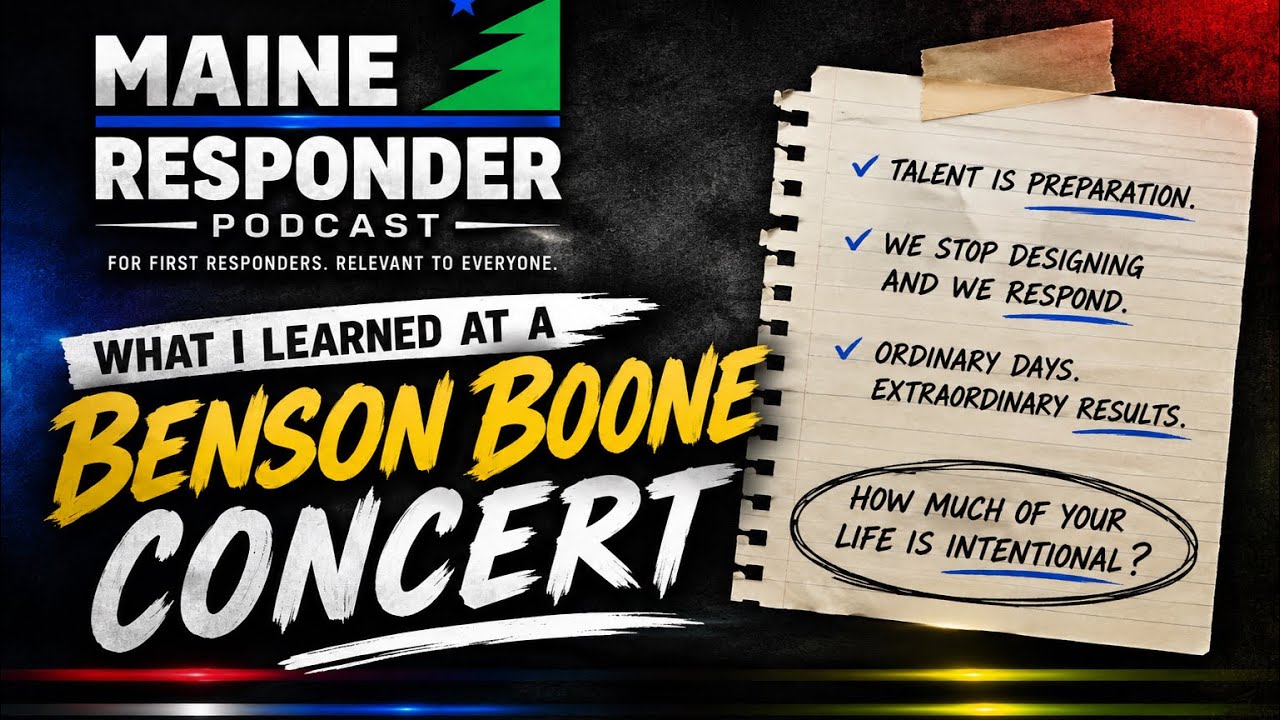
A family trip to a Benson Boone concert becomes an unexpected lesson about the work behind success. Elliott notices that what looks effortless onstage is built through countless hours of practice and unseen choices. That observation leads to a question that reaches beyond music: are we living intentionally, or simply reacting to what comes next? The episode connects preparation and consistency to first responder life, personal growth, and the goals people say matter to them. Elliott reflects on how small, repeated decisions shape a life over time and encourages listeners to look at where their time and attention are going. A thoughtful solo conversation about purpose, discipline, and choosing how to show up. The takeaway is not that everyone needs to chase a stage-level goal. It is that meaningful progress usually comes from ordinary choices repeated over time. Listeners can use the story as a prompt to choose one priority, decide what practice it requires, and protect a little tim…
 Ep. 23
23
July 3, 2026
Gratitude for 30 Days. Here's What I Learned.
Can a simple gratitude exercise shift the way you see your life? Elliott looks back on a 30-day challenge built around answering five questions each night. What began as a small routine became a way to notice patterns, recognize what was going well, and question how strongly negative experiences can shape our perspective. He reflects on journaling, self-awareness, and the stories we repeat to ourselves, including the difficult question of what we might be contributing to a problem. This solo episode is not a promise that gratitude fixes everything. It is an invitation to pay closer attention, make space for appreciation alongside hard things, and see what a consistent practice can teach you about yourself. A challenge like this can fit real schedules: the value is consistency, not a perfect journal entry. Writing things down may bring details forward that memory tends to overlook. The episode is an invitation to test a small routine, pay attention to what it reveals, and keep the p…
 Ep. 22
22
July 1, 2026
We Tried First2Respond Jerky... Here's Our Honest Review
Would First2Respond Jerky earn a permanent place in a patrol bag? Elliott and Billy try the product and share an unscripted review of its flavor, texture, ingredients, and whether they would recommend it to other first responders. The conversation includes the practical question of what makes a useful snack during long shifts, along with a look at the company’s mission to support the responder community. Expect honest reactions and some humor rather than a polished advertisement. If you have wondered whether this first responder focused jerky is worth trying, this episode gives you the hosts’ straightforward take and the details they considered while testing it. The hosts bring different reactions and use the conversation to help listeners judge the product for themselves. It is relevant to shift workers who want portable food during long days, though taste and value are personal. The episode keeps its focus on an honest review and the company’s support for responders.
Ep. 21 21
June 23, 2026
The Stress & Tension I Didn't Know I Was Carrying- Yoga for First Responders
Elliott was skeptical when he attended a Yoga for First Responders class. He expected stretching; instead, he started noticing how much tension he carried and how breathing and body awareness can influence the way stress feels. Elliott and Billy talk about the hesitation many police officers, firefighters, and EMS workers may have about yoga, and why a practical experience can challenge assumptions. The conversation covers nervous system regulation, stress that lingers after a shift, and simple ways to pay attention to the body. This episode is a personal reflection, not a prescription: it invites responders to stay curious about tools that can support recovery and wellbeing. Listeners who are curious about trying a class can take away a broader point: body awareness is one way to learn what stress feels like before it becomes impossible to ignore. The hosts share their experience and skepticism rather than presenting yoga as the only answer, making this a useful starting point for…
Ep. 20 20
June 7, 2026
How Do I Know It Works If I Never Commit To It?
How can you know whether something helps if you never give it a real chance? Elliott reflects on lifelong learning, curiosity, and the resistance that can keep us from trying new habits. Inspired by graduation season, learning new podcast equipment, and returning to running, he considers how small decisions can build momentum over time. The episode also touches on the difference between commitment and perfection: progress often begins by showing up long enough to learn from the experience. Elliott shares how a gratitude challenge grew out of these reflections and encourages listeners to stay open to growth, especially when the first step feels uncomfortable or inconvenient. Rather than promising instant transformation, the episode centers on curiosity and follow-through. Listeners can choose one manageable practice, give it enough time to evaluate, and reflect on what they learn. This approach applies to wellness habits, fitness, and other changes that are easy to dismiss before th…
 Ep. 19
19
May 28, 2026
What Nobody Tells You About Marrying a First Responder
First responder spouses often carry stress that is invisible to the people around them. Elliott talks with Jill Bellard and other Project Homefront voices about the realities of supporting someone in law enforcement, fire, EMS, dispatch, or corrections. They discuss isolation, communication challenges, hyper-independence, identity, and how unpredictable schedules affect family life. The conversation makes room for spouses’ experiences without reducing them to a support role. It also considers how peer connection and honest conversations can help partners feel less alone. This episode is for responders and loved ones who want to better understand the pressures a first responder career can place on a relationship. The conversation is also a reminder that spouses need support and community of their own. Responders can use it to listen more carefully to what a partner is carrying, while loved ones may recognize experiences they have struggled to put into words. The goal is mutual under…
Guest: Jill Bellard
 Ep. 18
18
May 21, 2026
Gossip Destroys Trust | Leadership, Wellness & Police Culture
Gossip can feel like harmless conversation, but its effects can spread through an entire team. Elliott and Billy explore how rumors influence trust, workplace culture, and the way people communicate in policing. They consider why gossip can feel rewarding, how it affects friendships and professional relationships, and what leaders can do when they hear it. The discussion asks whether a team’s everyday habits match the values it says it holds. Rather than framing the issue as a policy problem alone, the hosts focus on personal responsibility and the choices people make in ordinary conversations. A useful episode for first responders and leaders who want healthier communication and stronger trust at work. Responders can take this conversation back to their own teams by noticing what is said when someone is not in the room and asking whether it strengthens or weakens trust. The episode encourages direct, respectful communication and reminds leaders that the norms they tolerate help sh…
Ep. 17 17
May 11, 2026
You Can't Policy Your Way to Wellness
Wellness initiatives are more likely to matter when people trust the leaders and culture behind them. Elliott and Billy talk with Wally Fraser and Brad Gallant about the difference between policies and meaningful support in high-stress professions. They explore why some programs reach responders while others feel disconnected, along with leadership, authenticity, family impact, and mandatory check-ins. The conversation considers how an organization can make wellbeing part of everyday practice instead of treating it as a poster or annual requirement. For first responders, supervisors, and department leaders, this episode offers questions to help assess whether wellness efforts are meeting real needs. The discussion also makes clear that wellness looks different across agencies and individuals. Leaders can use the ideas here to ask responders what support feels credible, while staff can consider what helps them feel safe enough to participate. The episode focuses on culture and every…
Ep. 16 16
May 4, 2026
The FOODA Loop: Why We Say the Wrong Thing (Even When We Know Better)
A sharp response can happen before we have time to think. Elliott describes the FOODA Loop as a way to recognize that moment when frustration rises, attention narrows, and we are tempted to say something that makes a situation worse. He explores how stress and ego can shape conversations, then invites listeners to pause and decide how they want to respond. The idea applies to daily interactions with colleagues, family, and the public, especially in high-pressure work where small exchanges can have lasting effects. This episode offers a simple framework for building awareness, taking responsibility, and communicating more intentionally. The value of the framework is the pause it creates: you do not have to let the first reaction decide what happens next. Listeners can use the idea to review a conversation afterward, notice the moment where things shifted, and consider what response would better match their values the next time a similar situation arises.

April 28, 2026
Talking to Kids About Stress and Focus
Do fidget toys help children focus, or do they make it harder to pay attention? Elliott sits down with three young guests to hear their perspectives on NeeDohs, slime, putty, and other classroom fidgets. The conversation considers why a tool that helps one student settle may distract another, and why it helps to ask children what works for them. Rather than treating fidgets as a universal solution, this episode encourages curiosity about stress, attention, and the different ways kids learn. A warm, lighthearted discussion for parents, educators, and anyone interested in how children manage focus during a busy school day. For parents and educators, the exchange is a reminder to listen before deciding whether a fidget is helping. Children may be able to explain what supports their attention and what pulls it away. The episode offers a playful way to start a more thoughtful discussion about classroom needs, stress, and different learning styles.
 Ep. 14
14
April 17, 2026
Ep. 14 - 👉 Police Retirement, Financial Stress & Identity: Why Officers Feel Trapped in the Job
What makes it hard for an officer to imagine life after the job? Elliott reflects on retirement and identity, then joins Mark Roberts of Shift Change for a conversation about financial pressure in law enforcement. They discuss the uncertainty many officers feel around pensions and the way money concerns can make people feel stuck in a career. The conversation also looks at how policing can become part of a person’s identity and why preparing for retirement involves more than a financial calculation. This episode encourages responders to ask practical questions, seek reliable guidance, and consider who they want to be beyond their professional role. Listeners are encouraged to treat retirement planning as a gradual conversation about both practical finances and personal identity. Seeking clear information about benefits and options can make future choices less overwhelming. The episode is a starting point for reflection, not a substitute for individualized financial or retirement gu…
 Ep. 13
13
April 11, 2026
The Conversation That Changed How We Police
One conversation can change the way a department thinks about policing and wellness. Elliott Moya, Billy Dries, and Ron Lund talk with Hannah Longley about crisis intervention, peer support, and what happens after critical incidents. They discuss how peer support teams can help responders navigate difficult calls, why emotional support is part of public safety, and how workplace culture can shift when people are willing to talk honestly. The episode considers the role of training, connection, and leadership in helping officers access support. A thoughtful discussion for first responders and agencies looking to build a more supportive response to the emotional demands of the job. Departments building peer support can use this conversation to think about access, trust, and follow-up after hard calls. Responders may also hear language for experiences they have struggled to describe. The episode emphasizes that care is part of a healthy public safety culture and can strengthen the peop…
Guest: Hannah Longley
 Ep. 12
12
April 2, 2026
Ep. 12 - Chronic Pain in First Responders | Why “Just Stretching” Isn’t Enough
Chronic pain is common among first responders, yet many feel pressure to work through it without talking about the impact. Elliott and Billy speak with Trish, a licensed clinical professional counselor working within a police department, about what it is like to live and work with ongoing pain. They move beyond the familiar “just stretch” advice to discuss how pain can affect mood, energy, mindset, and daily routines. The conversation also considers how workplace culture can make it harder to seek help and why practical support matters. This episode offers a more honest view of chronic pain in public safety and encourages responders to take their experience seriously. The conversation invites responders to consider how pain is affecting more than their body and to speak with qualified professionals about the support they need. Supervisors can use the episode to reflect on whether their culture makes it easier or harder to acknowledge chronic pain. Listening with care is a meaningfu…
 Ep. 11
11
March 25, 2026
Ep. 11 - From Crisis Intervention to Wellness | Our Department’s Journey in Mental Health Policing
A department’s wellness journey can begin with one effort and grow into a larger culture change. Elliott talks with Ron about how their agency’s focus on crisis intervention team training during COVID led to questions about the wellbeing of officers themselves. They reflect on leadership, peer support, physical health, vulnerability, and what it means to care for the people doing difficult work. The episode is an honest look at how a public safety organization can move from training about community mental health to better supporting its own staff. It offers lessons for departments exploring wellness in practical, people-centered ways. For agencies, the story offers a useful reminder that wellness work can evolve as people recognize new needs. For responders, it makes room for vulnerability without treating it as weakness. The episode shows how a combination of training, leadership, peer connection, and attention to physical health can support a more complete approach.
 Ep. 10
10
March 21, 2026
Ep. 10 - You Good? The Simple Side of Wellness We Forget
Wellness conversations often begin after something goes wrong. Elliott asks whether first responders have overlooked the simple, positive moments that help people feel connected and well before a crisis. Prompted by a previous conversation with Matt Leach, this short solo episode reflects on what wellness can mean beyond trauma, mistakes, and hard calls. It considers how a simple “You good?” can open a door and why supportive check-ins should be part of ordinary work life. The episode offers a lighter entry point into responder wellness while still asking an important question: what helps people feel good, connected, and supported on a regular day? The question is simple enough to use in an ordinary conversation, but it works best when it comes with genuine attention. This episode encourages teams to build connection before a crisis and to recognize that wellness can include humor, belonging, and daily positive experiences. A small check-in may be a meaningful place to begin.
 Ep. 9
9
March 10, 2026
Ep. 9 - Doing the Work: Matt Leach on First Responder Wellness and Post-Traumatic Growth
Matt Leach brings experience from firefighting, social work, and first responder wellness to a conversation about what it means to care for yourself while serving others. Elliott and Matt discuss identity, retirement, and the way responders sometimes measure life by how much time remains in a career. They explore post-traumatic growth, the value of meaningful relationships outside work, and why wellness is a continuing practice rather than a finish line. The conversation connects personal experience with the broader mission of supporting responders and their families. A grounded episode for anyone considering how to build a life with purpose both on and off duty. Matt’s experience helps connect individual habits with the larger mission of responder wellness. The episode offers listeners a chance to think about what restores them, who they rely on, and how their values may change over a career. Its focus is steady and personal: care for yourself so service can remain sustainable.
 Ep. 8
8
March 3, 2026
Ep. 8 - Work Isn’t Your Family (And Why That Matters)
First responders often hear that their department is a family. Elliott and his wife Rebecca look at what that phrase can mean when it meets the realities of work, loyalty, and institutional disappointment. Their conversation explores boundaries, burnout, and the emotional weight of expecting a workplace to provide the same care as a family. They consider how this belief can affect relationships at home and why it may be healthier to build genuine connection without giving up clear limits. This episode is for responders who want to support their colleagues while protecting their own wellbeing and relationships beyond the job. The discussion is useful for anyone who has felt pressured to put work ahead of family or to accept blurred boundaries as proof of commitment. Elliott and Rebecca invite listeners to define healthy support on their own terms, name what they need from a workplace, and protect relationships that extend beyond the department.
Ep. 7 7
Feb. 26, 2026
Ep. 7 - I Had the Nightmare, Billy Took the Plunge (For Special Olympics)
A nightmare leaves Elliott thinking about stress and sleep, while Billy prepares to take the plunge—literally—for the Special Olympics. Their conversation moves from noticing stress signals and checking in with one another to the mental challenge of cold water exposure. Billy shares what it takes to complete 24 ocean plunges in 24 hours for the Special Olympics Super Plunge, and the hosts discuss beginner considerations and why doing hard things on purpose can build confidence. This episode mixes humor with a serious look at resilience, connection, and supporting a meaningful cause. It is a reminder to pay attention to what stress is telling you and find healthy ways to challenge yourself. The challenge is not to seek discomfort for its own sake, but to find thoughtful ways to stretch beyond routine and connect with other people. The episode also highlights how a trusted friend can make a hard goal feel more manageable. Listeners can reflect on which healthy challenges might build …
 Ep. 6
6
Feb. 16, 2026
Tactical Joy: Why Hobbies Matter More Than You Think
First responders can become so identified with the job that they forget what they enjoy outside it. Elliott and Billy explore “tactical joy”: choosing hobbies and activities that help people decompress, reconnect, and grow beyond their careers. Golf, cooking, archery, rucking, collecting, and other interests become a starting point for discussing perfectionism, enjoyment, and the value of doing something simply because it matters to you. The hosts ask why it can be hard to name a hobby and how personal interests can create balance after demanding shifts. A practical conversation about making space for life beyond the uniform and letting joy be part of responder wellness. Tactical joy does not need to be expensive or impressive. The hosts encourage listeners to explore interests that make them curious, give them a break from work, and create connection with others. This episode is a reminder that personal wellbeing can include play and discovery, not only recovery from difficult exp…