
 Apple Podcasts
 Spotify
 Youtube Music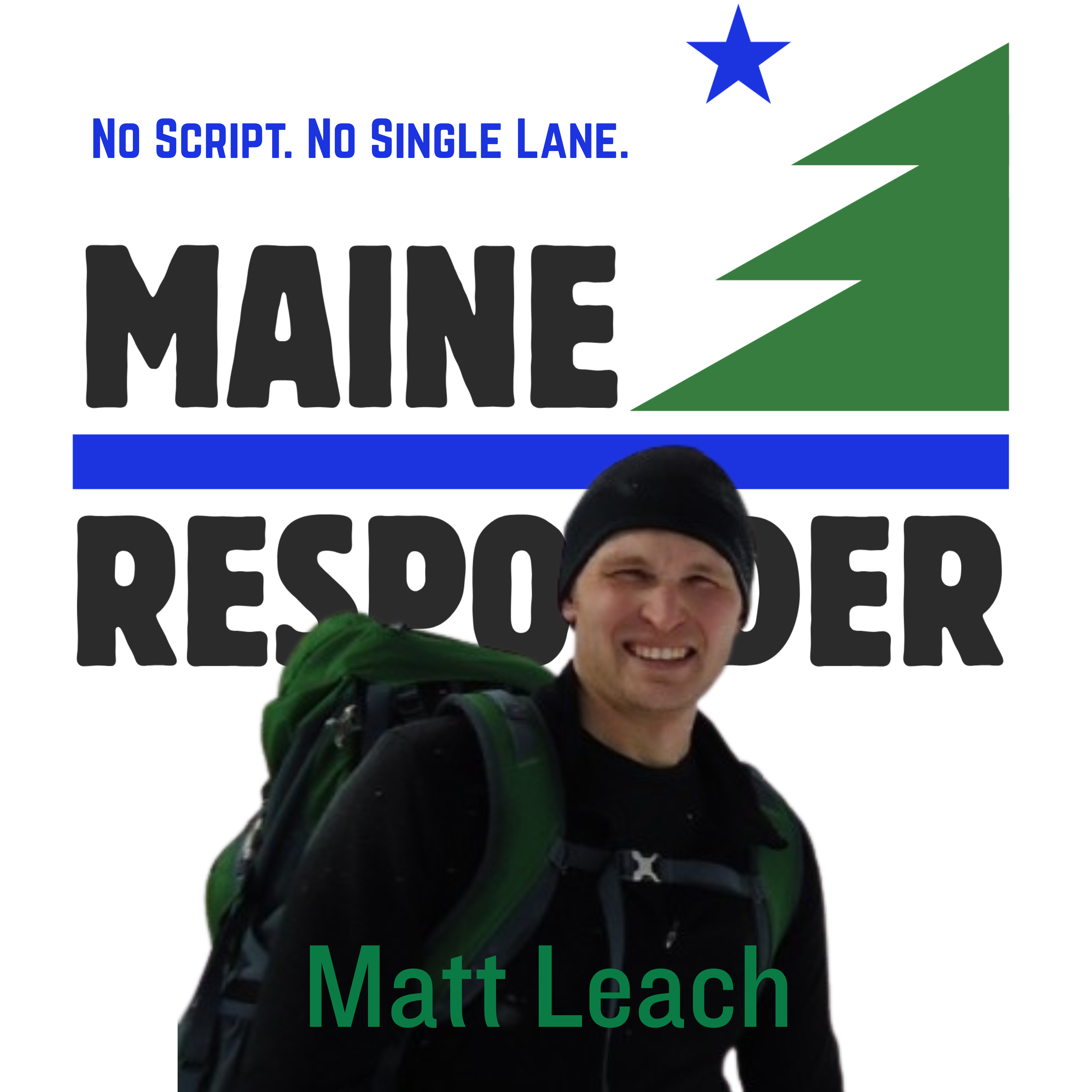
In this episode of the Maine Responder Podcast, we sit down with Matt Leach — firefighter, social worker, and one of the leaders helping shape the wellness mission at the York County Regional Training Center in Southern Maine.
What starts with a conversation about retirement, identity, and the strange way first responders seem to measure life by “how much time is left” turns into a deeper discussion about what it really means to care for yourself while serving others.
Matt shares his journey from the fire service into social work, how personal loss and years on the job shaped his perspective, and why peer support, therapy, prevention, and post-traumatic growth matter so much in first responder culture. The conversation explores the value of vulnerability, the role families play in recognizing when responders are struggling, and why wellness cannot just be a program — it has to be built into the culture.
Matt serves as the First Responder Wellness & Resiliency Program Administrator at the York County Regional Training Center connect with Matt https://www.linkedin.com/in/matthew-leach-7b473633/
Elliott: Last week's podcast, Becca filled in for you. Yeah. I think she did a great job. It was coming out of the heels of a really cool presentation that I was part of, but I talked about that. That was great. You, on the other hand, you were somewhere warm. I didn't want to come home. I did not want to come back. weather was gorgeous. Everything was perfect. We were down in Marco Island in Florida. I got some nice sun. I played pickleball. It was phenomenal. Pickleball. boxy ball, did walks. had the manatees in the little dock area there, you know, overlooking the water, we had dolphins swimming around too, went walking on the beach. It was great. like a little taste of that retired life. I'm looking for you to say shuffleboard or something. Well, you know what's funny? Yes. They had, they had two different, two, maybe two, three different shuffleboard courts around the whole area. I'm like, look at this. This is great. This is fantastic. This is the Maine responder podcast, real conversations about work, the pressure and the lives shaped by service. There's no single lane here, no script, just honest talk. Let's get into it. Talking to a couple of different people, one guy retired police officer. He said that last week was his 50 years after retirement. Wow. So he was retired for 50 years. He was doing great. He was moving. And I said, that's what I want to do. That's who I want to be. I want to be at that age. Moving around, hanging with my friends, being active and loving life. And then there was another retired New York state trooper that I met and he was out 15 years and just talking about the changes and things. one of the bigger things that kind of I picked up on, we go to the farmer's market and there's a Marco Island BD guy there. So I stopped, of course, I'm going to say something to him. You know, I told him I'm up from Maine work up there. And the first thing out of his mouth after he realized that I was a police officer says, got six years left. Not what do you do up there? How is it up there? Well, you know, this is what's going on down here. It's I got six years left. How about you? The timer, right? The timer that everybody's kind of got going in the back was crazy. So I told him, you know, my my shtick and what I've got going. I said, man, I can't wait to be down here, not working. And he just laughed. Walking back to the car. And Laura goes and looks me, she goes, OK, I've witnessed that conversation happen. several times now. You need a police officer for another area. And the only thing, and most of the time, the first thing that comes out of their mouth is how much time they have left on the job. What is it about you guys? That the only thing that you can talk about is retirement. She's like, you've got a lot of things going on that you do in and around officer wellness, firearms training, all the different stuff. And I'm sure he does too, but everybody looks at the commonality of retirement. When are you done? So what is that? â that's interesting. I don't know. I mean, I would, I would probably answer the same way, you know, I, I, maybe it's one of those things like live in the dream. The best math I've ever done in my life is figuring out how much time is left. Outside of that, it's horrible. I don't know, I wonder. So we're joined today by Matt Leach. Matt is a firefighter, social worker, one of the people helping to lead the wellness mission in the York County Regional Training Center here in Southern Maine. Matt is committed to supporting the wellbeing of first responders and building out programs that are going to be helpful. And helping people in the profession essentially be healthy, resilient, and stay connected to the community. he's a family man, someone who genuinely cares about helping others â live better I would say both â on and the job. So welcome Matt, our first guest. I always say fire service. I don't know why. Does that make sense? Fire service? I feel like I'm a lot older than I am when I say fire service. But I don't know, can you, I don't know, is it firefighter, fireman, fire woman? I don't, I don't know. Nobody's corrected me yet. So â I'm sticking it. But yeah, so fire service, â first responder, say it that way, I guess. And now you've decided to become a social worker, which is an awesome combo, culturally competent, right? Which is exactly what we're looking for in the profession. Matt, also here at the Weir County Regional Training Center, you and Jill, you guys are basically, you're heading up the wellness game here. for the County and beyond, hopefully. Tell us a little bit about that. Well, first and foremost, I'm ecstatic to be your first guest. It's in my first podcast. I'll also take one. Yeah, I wear a bunch of different hats, but in terms of the facility, the facility opened January was kind of a soft opening facilities located in Alfred. We sat in this beautiful building. It was part of some COVID funding money that came forward and really developed. a facility that was structured for her first responders. And yeah, Jill, Jill Ballard, she is a, she's a mobile therapist and a first responder spouse. She and I have been tasked with handling kind of the wellness and resiliency training here. And that's really where we're, we're starting. There's so much that can be done. And I think, you know, our goal, I do some education stuff with struggle well, which is a, which is a program. can talk about that at some point too, but they, Their model is, is first responders and, it includes firefighters, police officers, EMTs, â corrections, dispatch, anybody working from that, that 911 phone call backwards. And I found it fascinating. And that's kind of the model that we want to, want to kind of adopt here is yeah, we all have these different professions, but at the end of the day, the similarities and struggles and even the wins out of the profession, a lot of them are very similar. You know, our goal was to kind of capture that from a group standpoint to recognize like, yeah, I actually sometimes look at the police services doing a lot of different things that we're doing. And I think that's admirable. So I think combining some of the things that we're doing and the ideas of bringing up the same spot, saying, hey, let's take the best of it and kind of move it forward to support our people. From first responder to social work. â gosh. What's that journey like? I would love to know kind of what, what it was that brought you in that direction. Yeah, filling that void. Yeah. Ooh, that's a, that's, mean, we could be here right now. For all good reason, quick version, like I wanted to be a police officer. I started there at 14 years old, wanted to be a police officer. you know, the Explorer program gets shut down. So what do I do? You know, go into the fire station, knock on the door and I'm like, Hey, well, you say, man, they're like, hack five. And so they did. So, you I started as a volunteer in this community and had some really awesome experiences, but also had some really challenging experiences. And then fast forward, you know, 21 years old, I get my first fire job. Um, and you know, my first year as a paramedic, I had four pediatric codes that I was involved in. And, and, know, back then you're 21 years old, know, your brain's not fully developed until 30 these days. So, you know, I back and I I just, it was another call. Even though I knew that it was heavier, it was another call. Um, and I think as I went on in the career, it's funny because when you were talking about like, when do you remember counting down? And for me, it was a pretty, like year 12 to 13, somewhere in there is when I, think I started my countdown, you know, like, I got, you know, 10 years retire or what, know, whatever the number was. But I realized the work was getting heavy and, and drew me to kind of peer support stuff. Um, I remember my first peer support thing, the guy, we came across a guy and it was firefighter behavioral health awareness. And the guy does suicide tracking and believe it or not, first responders still don't have a database to track suicide and the work and the career. And you know, this guy once got his master's degree and during one of his projects, the instructor said, Hey, do you guys know you have like a suicide problem in the fire service? You know, and he's like, And so he, he took it on himself to start tracking that stuff and, â has done a great job of tracking like these, these events, because a lot of times retirees going take their life after retirement or whatever the case is. And we're just not capturing that. And that's a life, which is really important. And I just, I saw a place of, Hey, what can I do to not only figure my, my own experiences out, kind of work to help our group because we needed a peer support. Yeah. There's a degree of, of helping yourself, but at the same, you're there to serve the population that we work with. So that was, that was kind of my draw. And I, I really fell into peer support work and started getting some education around it. And I didn't want to, I didn't want to be a firefighter for 40 years. You know, I watched, I watched guys at the fire station. They're staying years and years and years. And I'm like, I just don't want to do that. Like that's so what do you do? And, uh, 2015, my dad passed away and that was a, that was a sentinel event. Like that was a big event for me and he was a pastor. So it's like, Hey, do you go in the family business? You know, and that wasn't, that wasn't my calling. And, um, you know, he, but yet I grew up with a lot of skillset from that experience and, you know, watching my dad who did. was a counselor, did a lot of work with substance use â folks. And I just realized, like, man, I was built for service and I just wanted to learn to serve in a different way. so yeah, mean, going to school, I swore off, I was never going to work with first responders. I was, I was, I was like, I can't figure myself out. Hey, I got my odor shoes. You know, we all do that. Right. Why do you think that is? You just said configure yourself out, right? Was it was it â frustration at all or just like, nope, I just want something different. Yeah, we can use the big dirty word shame, right? Like, I mean, whenever we, when we push away from things, a lot of times it's our own, you know, that shame as a driver. And I think if I look back and talk about, I hope to talk about that, but post-traumatic growth, and sometimes we focus really on like that negative experience and how it, how it took pieces of us. But I think sometimes we forget that it, that it grew us into the clays. And I mean, the human brain's prime for survival. So that's why we do it. mean, that's a short, but, â no, I think that, I think a lot of us don't recognize what's inside of us and that you're going to go through that season to really, to really push forward and get the lessons, get the experience and pull all the meat off the bone. And that's not fun. Yeah. You know, I think that that's a lot of us get stuck in that. And I would say that it's a season when you go there, if you're willing to go there. Cause that's a big deal if you're willing to do the work. And as a therapist, we always, I'm sure you heard the term, you know, willing to do the work. It's work changes work. And, and for many of us were more comfortable staying in what we know. And even the most uncomfortable spaces. â but yeah, I mean, I think a lot of us, like it's uncomfortable to do that work, but when you do it, it's fulfilling. And I think that that's been, that's been part of my journey is as I've gone. I've recognized that the same things that were challenging actually were gifts as I looked to the other side, those challenges that I've had and experienced. get the luxury of listening to first responders and therapy is not about advice, but it's not, it's about listening and seeing your journey and providing a sense of hope in it. Because a lot of us, when we get in the box, it's like, there's no hope. you know, when you talk to, I can talk to somebody and say, yeah, okay. You had a PTSD diagnosis, but there's hope. You know, this is not a sentence. This is not a t-shirt. â there's hope out of this and there's pathways, roots, â but you gotta do the work. Yeah. â you know, when I went to therapy, I, I, found I was doing a lot of talking. It felt good to talk. And also when I was doing that talking and I say this often is that these lights would go off and I was like, â you know, I think I just figured it out, not figured it out, but like, â I hear what I'm saying now. I to have the right person to be on the other side of you, just kind of guiding you along that conversation. was just so enlightening. It was just a really good feeling. you, I don't know, you walk out of there just for me, feeling amazing, empowered, just in a good mood. I did not expect that. My thought was I'm going to go in there. I'm going to, I'm going to say all this stuff. I'm going to feel like shit. It's just going to make it worse. You know, these are all the roadblocks I was putting up before I ever even tried it. I mean, I just say this, you know, in case one of the two people that listens to this decides to go to therapy if they're not already. um, yeah, I think on the same lines, enlightenment is exactly the way I I would put it. had that same fear of going to therapy, going, this is weakness, but I'm going to give it a try. You know, I'm going to share my vulnerabilities and where I feel is lacking or, what's, what's bothering me. And I'm going to see that as I'm letting somebody know about my weakness or weaknesses and going through was exactly that totally different experience. I did, I thought I walked out of the room with almost a pep and I'm like, wow, that felt good to release that. didn't know that that was weighing me down as much as it, as it was. that just by talking, didn't get much advice, but I was heard and it was a great feeling, which then, you know, encouraged me to now I'm part of the York County peer support team. So I think it's fantastic that you guys are leading this up here. think it's going to be a. very beneficial piece for our community, first responder community and for our community in general too. So I'm excited about that and to hear more and see more about it. and going and doing the peer support. has me peeling back. We're there to help others, but you're also peeling back layers for yourself too. Like you hear somebody say something and you go, I said that I felt that. And now I'm hearing it from somebody else. So we're there to help people, but we're, helping ourselves too. It's validating to hear it that we're not the only ones. yeah, I think, I think that I can only speak to my struggle, but I think that isolation piece, I'm the only one experiencing this and I'm the only one. and nobody would feel this way. And I can't believe I feel this way. We do that to ourselves. That's, that's the human condition that we do. And I think that the work that, that everybody in the peer support community and, and, know, I include the work you're doing here for sure is like you're, you're bringing awareness to you're not the only one. You're not the only one sitting in the recliner thinking, wow, this is this. And that is my. I think that's, that's, that's step one to get people to explore. And when you talk about therapy, like therapy is beneficial when you dig in and you do the work. And I think that a lot of, a lot of our folks, like they, do, they're willing to do the work a lot. They just don't know the particular starting points. And a lot of times the starting points are you kind of sorting life out and getting your feet under you. Because at some point life is. whacked every one of sideways. And a lot of those things, like when you talk about the wellness stuff, â when your world's out of control, you got to figure out like, is in my control? And that's, that's, that's a lot of step one. You know, we talk about therapy is starting with people there and saying, yeah, I get it. I'm, hearing you, but what is a small stuff? And, and I am big, I did family therapy, which makes me big on accountability. I think our population. when they're willing to do the work and dig in, I think that they walk out of therapy and say, I can do this. And then they see the results and the efforts that they put in. And that's, think that's my favorite part is when they do the work, when they're ready and they're like, I'm ready. Good. Because that's, that's, that's the difference between staying where you are and moving forward. And again, We tend to want to stay in the discomfort because that's what we know. And that vulnerability word that you talk about that that's huge because nobody wears a t-shirt that says I enjoy the vulnerable. Nobody. I mean, quite honestly, it's, it's, it's, it's opposite of your trading. Right. And yet if you think about it, some of the best people that we work with know how to use tactical vulnerability. Like they know how to, they know how to sit with a family. And so, fun little fact in between a lot of the other stuff I did, â youth fire prevention and prevention has been a mindset that's just built it. I, I think that that's some of the struggle that I've had over the years is going to the same experience and then going there a week later. I, I, it's, it's, it's, it's the definition of insanity when we're doing these things over. And, â but yet we're in a business, which is really important to understand. And this is a lot of our mindset. We're in a business that that's fix it now. fix the problem in front of us. And we're looking at things that in my mind is a bit backwards, but it does take some investment in the other side. I think we're starting to move there with the screen, you know, the annual check-ins I think are great. I think it's a way for people to demystify meeting with a clinician or a therapist. think it takes away a little bit of that, like walking through the office. I think those are great strategies, but I think we're really waiting until somebody's career is at a point or they're in a situation or event and we're not really dialing back with like, let's do some education. That is with the training facility. actually, all our classes are open for family support system. So not just the first responder for family support systems. And the reason for that is our family is recognized when we're doing worse, far before our employer. Well, yeah, absolutely. So, you know, I think that, â We're trying to create that culture where it's like, Hey, we can have those conversations supports. â you know, Jill's work that she's doing and I, there's, there's a great, great spouses, Lynn's Mark. I just, â she kind of heads it up with some other great spouses, but they, â they're addressing that they are becoming a sounding board for spouses to be able to share their experiences because I'm only married because of why you fit her willingness. to sit through some challenging days. And I'm humbled by that because I do think first responder spouses are built different. I do. I think they're way tougher than we give them credit for, typically tougher than the first responder. When we start to recognize this on a preventative standpoint, we start to bring them into the mix of the conversation because they're likely to recognize problematic whether it be an addiction issue, whether it be a mental health concern, they're likely to recognize that far before your employer is. And to me, we sit in this stigma still of like, if I tap out or take a break, then I'm weak. I sat there and there's no soapbox. Like I'm embarrassed that I didn't tap out. You know, I think that one of the things that would have changed A lot of how I navigated some situations was, was taking that space, you know, and as first responders, I don't think we're willing to recognize that sometimes. And, know, recognize that your nervous system, you know, has been on high alert for a long period of time. There needs to be some recovery. And, and if you're not getting that, you're hurting, you're setting yourself up for burnout. You're setting yourself up for a lot of these other problematic behaviors. And, â so yeah, I mean, I think that. We're still in that mindset where we're going to deal with it when it becomes a problem. Yeah. I love that. think just, you know, thinking about my family. â yeah, my spouse is probably way tougher than me and, and, has identified some stuff and has challenged me and has made me better in so many ways. can, I could tee up just talking about it because there have been some days that just, yeah. â Yeah, I'm really grateful. I'm really grateful for the situation I have for sure. And it's so cool that this now exists, right? This group of spouses out there doing the work. It's incredible. What's the vision for the future of the program that you're trying to start here? I think the vision is embedding wellness concepts in programs. you know, we will work to develop like a two hour in-service wellness program for an EMT class or if I were one of two class or any of the PD related classes that they can be tacked, you know, pulled into a class. So you as an instructor, like, listen, I want, I want my students to learn, you know, a wellness activity. â you know, one of the things is I call, I call it the, I call it the, you know, first day therapist toolbox. Like, â you know, what, what I would work with somebody from a therapy standpoint is really to develop early skills because our group, believe it or not, can put skills to use really is they, can. Once they understand that, once they buy into it, we live in structure. So for us, you help people understand, like, here's the structure, let's work together to kind of figure out like how structure in your life is working and peeling that out and saying, where do you work? What activity is good for you? You know, when you talk about pickleball, you know, that's renewing. You know, hear, you know, who are you doing it with? How is that working? Are you building that into your life intentionally and not just in a passive nature? Right. Because that's, you know, I, I took up jujitsu a couple of years ago and I never realized how much it was. mean, like I did on the mats, you recognize you're like, this is great. This is fantastic. And it's one of those things. If you build those structures in your life, those wellness activities, they're, they're helpful. There are a place for you to get that energy out. And, and I mean, those are just activities, but we're talking about skills that we can build in to people, â or, or not build into people, but just to, present to them and, see breathing exercises. Some people love them. Some people think they're foolish. Great. Fantastic. But it's a toolbox, you know, not everybody uses a wrench. Some might use a hammer. So, and I think presenting that to people. is kind of our start when we talk about prevention. You know, I do think we've done a really good job of talking about some of the challenges of a career, but my, my hope is, and I work through a post-traumatic growth mindset is my hope is to point out some of the wins in the career that have. You know, â and, and I think sometimes that's hard when you talk about it, but as a crew, you know, recognizing I speak from a fire standpoint, â when you, know, you have a tough call and you're part of a group. is to not only focus on that experience, but the wins out of that experience. And we kind of set ourselves up for failure with after action reports. We're looking for that one thing that we missed, but we're not always celebrating those 99 that we did right. I think some of the good after actions that I've seen have really supported that and really focused on like, here's the wins, here's our opportunities. So those are some things that I really, I think starting to help build that in. â I think that we're pretty much open to, the concept of what people want to bring here. â it's not about, you know, calling your department saying, Hey, this is, this is the program, right? Cause it's going to be totally different. Like your program for your department is going to be different from mine. It's going to be different. What do people need? And the hope is that this training facility will act as kind of a. a place where people can start to identify the need and we can start to fill that through education and training and support. â So that's kind of the hope of that facility. That's great. The facility itself, having that here â is phenomenal. And I remember walking through the doors here when it wasn't even done. And I was like, this is, this is a game changer. And then to know the wellness piece in such a big part of this, for me, I was like, this is, this is great. At least right now, it seems like we're doing everything right, right? Everybody's gonna follow through and it's gonna be amazing. You mentioned when you were just talking post-traumatic growth. And I think I just saw that in the class, right? You mentioned struggle well also. â yeah. Can you talk about that? Because I reached out to you and I was like, Matt, in an email, if you could hear my voice, I was like, should I take this or am I gonna be a chief getting in the way of people that wanna actually have a conversation and not feel weird by my range? First of all, I love And I love it. One that you're willing to reach out and be the big vulnerable word. Like fantastic, right? No. And the best part about these classes, â so struggle well is a two day â event. It's a two eight hour day session and it's based on post-traumatic growth. And it gives opportunity to kind of lend â to understanding what post-traumatic growth is. It talks about the different strategies that we can use to kind of recognize and get space for post-traumatic growth and perspective. And then it also kind of reflects on your story as a human being. know, when you asked me about my story, you know, â I, sometimes we miss, sometimes we describe our stories as just these negative experiences that happen to us, you know, and sometimes I look at my, the loss of my dad at a younger age, Um, yeah, it was pretty horrific, but it absolutely changed the course of my life for the better. It reaffirmed my service. It reaffirmed these things that need me to dig deeper into some personal spaces that I wasn't willing to go up till that point. Like I was doing great. But on the other part, my value system around my family, like I was balancing it, but I wasn't digging in as much as I, as much as my value. for family showed. So I think that that's where like these programs. â So yeah, that's that's post dramatic growth is really built on that concept. And, â you know, it talks about services talks about how to serve. But no, it's it balances there's no rank at the This is not and to be honest with you, the classes that I've done, and I just did one recently, like, the guys are looking at leadership and going, yeah. You know, when you've got leadership up there being honest and vulnerable and your debt of sharing is up to you. Nobody comes and says, listen, you're going to share this. No, you're not. You can share what you want. You can get what you want out of the program. can sit there and stare and color things, or you can just sit there and dive in. It's up to you. Your depth of participation of this program is your depth. â but no, I, I, I'm super encouraged because I think, you know, much like the concept of bringing our groups together, you get police officers, corrections, and you've got folks from the state structure in terms of law enforcement and stuff like that. You have all these people involved and then somebody will start sharing and it'll be like, but I'm a fireman and you're a police officer. It universalizes those experiences and it puts it through the lens of growth. And I think a lot of us, when we get into this career, you know, we get into a precuriosity and grow. Like, you know, remember the first time you go on your first call, like you're like, I'm there to work, I'm ready, I'm, you know, and over time it kind of wanes. And I think that that's what this program really talks about is how to look at your career and how to say, all these experiences, how do I make sense of them? And it gives you a place. But there's a two day, so two day struggle well. And then there's a program called warrior path. And, â I was an attendee, a warrior path. And, it's a five day you, know, you get on a plane and they pay for the plane ticket and they'll fly you. There's 14 places throughout the country. We've got the luxury of having Travis mills foundation right up the street. and, and you are with eight other participants and it's a deep dive. It is not a, it is, it is a deep dive into what you want. And, â I always said I probably should have hit that around the 15 year mark of my career. I think it would have been a great space. And that's the look back method, right? But at the end of the day, I wouldn't be here if that had happened. And I think that that's an important part to recognize. But if you're in a space in your career and you're struggling, you're looking at trying to make sense of this and trying to make sense of what you're doing in the career, â it offers a deep dive and it's free. All these programs are free. They're part of Boulder Crest, â is a organization that a gentleman started. was an EOD guy and he started these programs for free. And in really recognizing that our work is important and if we're not honoring our work and recognizing us, we're missing the vote. yeah, but we're doing one in Alfred. â We're doing one in Alfred at the trading facility at 13th and 14th of April. â we've got one coming up in the fall. â there's still room for the, for the one in April. So I still have a handful of spots left, which is great. So sign up please. I mean, anybody who wants to know anything about those programs, I'm more than happy to share. So that's great. got this. I right along that same line was Utah North Emporio path. We did that conference up in Rumford and they were up there. And just talking with them, you know, at first I was like, â it's not, I don't have the damage, I guess I should say internally to go to that. And I kind of said, was like, yeah, I'm good. They're like, no, you should go. You'll be surprised at what you're going to find out about yourself. And then you'll go through it and you'll want to help us more and work with others more. So it's, it's coming full circle now from that, hearing it from you going, okay. This is more of the path is showing itself a little bit more through the help and helping yourself to help others. Kind of like the airplane method, you know, the oxygen mass drops. You got to put it on yourself first to help others. I, there's two parts. There's two parts of that, that I, would definitely talk to, you know, where your path is not for, I guess the analogy I think of is, â you know, the cars, you know, the movie, the cars, when he's rolling in with the tires hanging off on fire, you know, and That analogy, like we're all waiting for that. We're like, okay, but, but, that's my argument. We talked about this before, like wait until we wait until we're waiting until on fire and the wheels are falling off. like this program, sure. That supports a lot of this, but, um, you know, the, the group that I went with was all throughout the country was, you know, a bunch of military guys, couple of first responders, you know, a lot of, a lot of our military folks were, you know, first responder folks as well in the room, which was great. Um, but yeah, I mean, I think that a lot of us put that barrier in place and say, I'm going to wait until this, I'm going to wait until this. I did, I did. was so, I was so ashamed to go. Like I, I felt bad. I, know, my fire chief, he's no, we were, started as kids together. Like this is a guy that I can say anything to. And I felt uncomfortable going to him and being like, Hey, I'm going to go do this. And when I finally did, I got the guts up, you know, he's like, Yeah. Yeah. And, and I think a lot of it that we, we miss, you know, we wait, we're like, I'm not bad enough for, I'm not necessarily like that. And I would argue it's a prevention program. it, it, it, you need to take the stuff that you've been. And that's why I say like that 15 year, you know, person in the career, like what a benefit place to go to lay that stuff down. You did 15 years in a first responder career you've done and seen some experience. I don't care if you've been in the smallest town in the world or the biggest Metro place. And, â the program's just great for that. It allows you to lay your experiences, make sense of them, reaffirm your value system and understand what your value. And this is like, I'm a big value person. â and I think we all are in the first responder world, especially when we get into it, you know, we put it on the cars, we do this, we put it on the trucks. â and I, I think that that space. taking that time for yourself and doing that is just that, it's that tap out, you know, that I talk about in your career, that it gives you that room to breathe a little bit and say, listen, I am here. You know, I am doing this. Struggle Well has opened up retirees too. â My wife cuts hair, so she sees the retirees other halves. So it's one of those spaces, that first couple of years from retirement. can be really challenging because you had a value system and all of a sudden it kind of shifted or changed or that group around you. It's gone. And yeah, and that's where I hear like everybody talks about, oh, retirement is going to be great. And then you talk to some retirees and you're like, first couple of years of retirement are challenging. This program is really good in helping you navigate that piece. At the very least, looking at what you're doing and saying, is this what I want to do? And really pulling that sense of control back in your life. Like I can do this. So yeah, I mean, I love it. And I hope more people take advantage of it. It's different, you know? And I think our people want growth. They want to make sense of the job. And I think this does an opportunity or has an opportunity. I'll say so. Yeah, I signed up for it. So I'm looking forward to it. I went to a retreat in California. â It was command staff, right? Number one and number two. This is how they ran this one, but they have a bunch of different programs. And I was like, what am I doing? Going to this, you know? And a friend of mine, know, in the profession said, hey, this is going to be covered. I want you to go. You're into wellness. You're going to get something out of this. And I'm like, all right, great. Trip to California. And I didn't know what to expect. I didn't know who was going to be there. It was a very small, intimate group. â It changed me. It had such an impact. And when I came back, I was like two and a half days. That's all it was. We did a lot of different things, a lot of things that I wouldn't do normally. Well, I probably would now, but you know what mean? I wouldn't have done them at first. that, it just, I just felt so light. I felt so good listening to other chiefs in the room from departments of all, I was the chief of the smallest department. The issues that we create for ourselves, I'll say in this instance, are all the same. We're all worried about the same things and when you say them out loud, kind of like I mentioned before when I was in therapy and I'm talking, they kind of sound, I don't want to minimize it and say ridiculous, but for me, They sounded ridiculous. like, what am I worried about this ridiculous thing or whatever it is? And it just puts things into such perspective. the group that was running it was, mean, just, they were so good that I ended up saying, did you guys bug my house and are you looking at my social media? How do you know this? How do you know this so well? And they just, you know, it's what. It's what you guys do. know, so you, yeah. So it's kind of, they're looking at it from a different lens. And for us, I say it every single time. My head is nodded. I didn't know, you know, it just, it just was, you know, a time where I needed to take a minute, breathe and sort it out and go into that retreat was very much that, you know, and, â so I, like you, whether it's struggle well, whether it's, you know, Don't be scared of these things, you know, even though it might seem a little woo or whatever. I'm telling you, I guarantee it'll probably, â not throw socks off and it would be way, way more than, than you would give it credit for ahead of time. I look, I'm looking forward to this. I'm looking forward to going. Yeah. I love that. I love that for you. And I think that a lot of people, when they do these things, they're outside. They're different, right? They, they, they offer opportunity for us. You know, and they can act as a catalyst for our change that a lot of times like, know, you know it in your heart, but you're like, man, I just, I don't know where to go with this. They create that space for us to do that. work in such demanding careers that like, there's not a, there's not a lot of space, you know, um, don't care. Like, I don't care if you work in the smallest place to the biggest blast, the speed that we operate. It just, doesn't allow us to do that. And, um, That's, mean, yeah, I would really encourage people if you haven't done that in your career. You know, I have crazy ideas about sabbatical concepts in the fire service. I mean, programs like this offer a little bit of that concept where, you know, you get to create space for you. And that is not something that people in service typically do. â We're here to serve and we're here to serve some more. then, you know, â but no, I'm excited. I, I hope. that you'll see the same experience and a lot have. And I think, I think last I knew like almost 600 people in the state of Maine have gone through struggle. Well, wow. Yeah. So, â I it's, it's. Ironically it's spread far. The Northern part of the state is showing off, you know, â they have done some great classes. We've had a little bit harder time, you know, down here getting it started. â but I'm really hoping with the training facility that we'll get some folks in, â to really champion it. And, â you know, I, I look at leadership like you showing up and, and, and doing that says a lot because, know, your officers, when they go, when they ask for that time off to do it, when they do that, you're like, that is important. â and I do think that this is a, the two day is very much, you know, kind of, applies to pretty much everybody, you know, that the lawyer path concept, yeah, you're struggling more, but again, I, know, to your point, like, you don't have to be struck, you know, yeah. You gotta be in a place where you're looking for some change, but you don't have to wait until the wheels are gone. But that's for any of these programs. Matt, how long have you been working fire? Career, 23 years. 23 years, okay. 23 years. Where you are today, right? Which is, I mean, for you, it's just a really cool place, I think. Like I said before, culturally competent is one thing, but you're in it. And so I think that's awesome. What would you offer for a piece of advice, somebody new, who's, police, fire, EMT dispatcher, and they just happen to know that your experience and what you do now, what would you offer a new person who is like, I'm thinking about it? Wow. That's a solid question. I think what I would I would offer a new person is there are points in your career where you're going to have to take care of yourself. Yeah. There are points when your career where you're going to have to, to, look at your career in terms of space for you and the speed of the career and stuff like that. I think that. And I'm, and I'm only looking from my spot, but there are times in my career that I didn't have space and that resulted in me playing catch up later on. that makes sense, you know, that you're, you're, know, you can only press the gas for so long before your tank's going to run out. And, and I think that we're starting to recognize that a little bit. You know, â I know from, I laugh because, know, I'm going to be the one shouting boundaries. â I know it's a new concept to a lot of people, you know, you go to therapy, it's a therapy word, but, â we, we see a generation coming in that I really. seed does a good job with boundaries. They realize that work and work and home is home. And yet we've got a generation and you know, fire service and I speak from that perspective, but â it still doesn't totally understand what to do with that. I think there's a middle ground here, right? There's always, mean, it's a pendulum swing, but I think there's a middle ground because I do think you can serve. I do think you can serve well and I still think you can have boundaries. You know, â I still think you can mean into the job and still have boundaries and it's not an either or this is, know, and that has to be able to change throughout a career because there are going to be times you have a family, you know, you have a family, you're in the throes of it. There's times where that pendulum is going to have to swing a little bit towards your family and knowing that your career, okay, this is a season of my career. This isn't the whole, you know, and I think, I think we're going to do a lot of work around that. My hope is that we can start to educate people on that. And, and also I think educated leadership on that concept too, because a lot of times what I notice in our side of the fence is when you have folks that are productive folks, they tend to be even more productive tasks. And then, and then that doesn't leave that room for balance sometimes. And I think as leadership, you know, maybe that's a task level thing to recognize across the board. I, I'm a middle leadership dude. â but I think that recognizing that there are seasons where as a leader, You've got to recognize that this staff member needs more room here, you know, and being able to share that and being able to say, listen, you got this going on. I get, I've got 72,000 projects that I can have you on, but I'm not sure that's valuable to you as you and having those check-ins. Um, and you know, um, that's what, yeah, I think that that's what I would say. You know, um, I'm not a fan of working 72 to 80 hours a week. think. you know, the data coming out right now is like 52 hours a week, anything over that, then we start to see some really challenging spots. And you think about a first responder career, how many people work over 52 hours a week, big number, big number. I think we're gonna have to really look at that. What do you think, â you know, as far as challenges and wellness on the organizational level, we always hear it's leadership, it's leadership, you know? And I was just, I've been giving this a lot of thought because I want to be able to answer the question, where do we start? We want to create a wellness program. Where do we start? And I hate, you know, I don't hate the term wellness program. feel like you're already starting off wrong. It's, you know, like I say, right? Yeah. It's the culture. what, but, but I think it's easy to say top down, you know, the leadership. And so I started thinking about this. and was listening to another podcast and they said something that hit me. And it was about continuous improvement, things like that. What I took away was that wellness lives or should live in the shift. So it's that middle supervision, the sergeants, things like that. That's where it should live in the, not so much with the chief. And I could have that wrong. mean, it should, right? The chief should obviously support these things and encourage these things, but it really lives in the share. That's kind of what I came up with. Yeah, if the message isn't being spread and continued and carried through the shift, it's not going to carry through. Yeah, I agree. think it's got to be in the middle. Yeah. I to push it through. I think, I guess there's a concept that, that I learned that I came across was that there's a statement. It's what you do for us, do with us. And, and I think that any type of pro in, I don't, I don't love the word programs because I think programs imply that we're, we're, it's a one size fits all. I mean, and, and, and when you're talking about organizational change, your culture, not a one size fits all. Your organization is different than mine. that's good. That's good because it's representative of your community, your town, this map. But I learned about a concept called sanctuary in school. And it was about having a place for first responders to come back and feel a sense of security in their work. And they use safety. Whenever I work with first responders, don't use the word safety. Because listen, when's the last time you felt safe? Most people would be like, I was fine. I provide safety, not feel it. This concept of security in your organization, and I think that that's not only done but felt. And I think it's at all levels. think when you come in, like, yeah, we're all responsible stewards of it. That when they go out in the field, that first responders need to come back to a place that feels safe. And they talked about it in the terms of sanctuary, that feels secure. Because we're working with individuals that we don't always have great experiences with. So however you create that culture, and I think that's more, I think that's more done on the conversation level of what is like, what, what, what you need versus what, you know, I might need is different. But I think that's important to have. And when you're having those conversations as an organization and saying, listen, what are we doing for our people as a leadership, you know, talking to middle, middle. middle groups, you what are we doing for our people? And what do need to be doing for our people? I think that's important because it's a back and forth. We are all responsible. And that includes from the guy walking in the door to the guy walking out the door. â when we start teaching that and preaching that and sharing that, I think it gives a buy-in to the game. â Because I don't think wellness is a program. I think it's going to be a concept that we build through organization and strengthen them. and create resilience. It's been good, man. It's been a good conversation. First responder, getting into the social work game. I love it. And you have a presentation coming up, right? I do. I do. It's on post-traumatic growth. It's the, I gotta look, I think it's the 27th. Yeah, I think it's March 27th. We're doing it here at the facility. It's on post-traumatic growth. Gotta cover concepts, but. In my work, â it's going to be more skill-based stuff. think a lot of our people want skills on how to regulate their systems, how to regulate this, how to create margin. â And a lot of it's going to be filled with that because understanding post-traumatic growth is you got to create capacity to see it there. You got to create capacity to feel it. â And a lot of that is skill-based stuff. yeah, I mean, I would say â those who are interested in coming, come to the program. It will be doing a lot of, you'll walk out with some tangible things that you can, you know, I'm not going to tell her to go to pickleball with Jiu-Jitsu. But to how to get to some of those spaces, you know, from a first responder perspective, because I think that, you know, that's my take. But I think, yeah, it'll, it'll be great. We've had continued attendance here, which has just been amazing. I mean, hope to fill the room and we're doing a lot of good things with the program and you're part of it from the steering committee. I'm grateful to be able to have you you as part of it. Yeah, I'm proud to be. I'm walking right alongside you, man. Whatever, know, whatever you need from me, I just, like I said, I think this is great. I think this is going to be some powerful stuff. I think that comes out of everything that you and Jill are doing and everybody, everybody involved. mean, you're all leaders in this, you know, everybody, there's a pretty good sized group that is really, I think, committed. to just being a part of it and bringing this forward. So I love it. I think it's great. I'm like, finally. know, finally we're moving in the right direction here in not York County, but even in Maine. Sometimes we can be a little bit behind on some things. Right now I feel like we're not only catching up, but we're gonna surpass it. It just feels good. I'm gonna go ahead and say it. We're gonna push forward and we're gonna do some great things here. That's my expectation, right. No, and I think... One of the last things that I would really love to push is, you know, you will see us start to push out some information to agencies. you're part of that, you know, if you're in an agency, part of leadership, you know, get it to the people that need to know. We're going to start putting out some different information to try to get back to see what people are interested in, what they're doing, what's working. Because we, I don't want to repeat what's working. You know, we're going to repeat what's working, but I don't want to repeat programs that are already in place. And the other part is if you're interested in being part of this conversation, please reach out to me, â Jill, â Chief Hooper at the facility â and come and attend the program and have a conversation. This is not something that we want to stay here. I've already had people talk about, well, let's get a group together. Let's get a, you know, let's get a coffee club together. Absolutely. That's what we're talking about. So if you're part of that concept and willing to stand up something that's going to be, you know, â consistent because that's what we're looking for. know, anything we stand up has to have consistency behind it and build trust with our groups. â but if you're part of that and, â reach out, would love to have a conversation with you because we're all part of the work. Yep. Absolutely. Hey, yeah. Starts B. I think I'm going to stick with enlightening. We've only done a two podcasts. Our first guest, my neck is tired from nodding my head. Yes. In a agreement and it just feels good. The momentum is there. think we've got a good space for it and the right people behind it. So I'm excited and proud to see what's next. Appreciate your time, Matt, for sure. Thanks for having me. This has been an awesome experience. Awesome. Thanks, Matt. We'll put some links, how to get in touch with you, maybe email or something like that in the podcast description. Matt, anything in the last words? Go do the work. Have fun. And this really can be a rewarding career. Well, thanks for joining us. And for the two of you listening, as we always say, be safe.