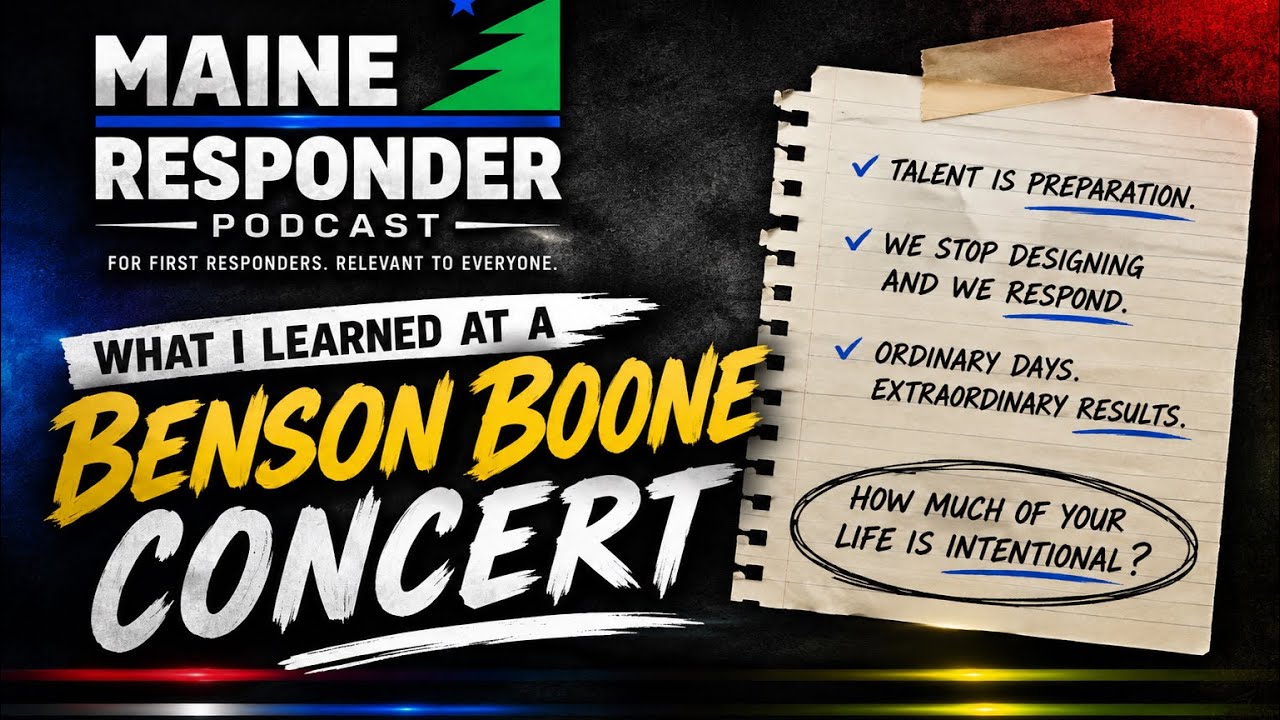
The Backflip Nobody Saw: What a Pop Concert Taught Me About Mastery and Drift
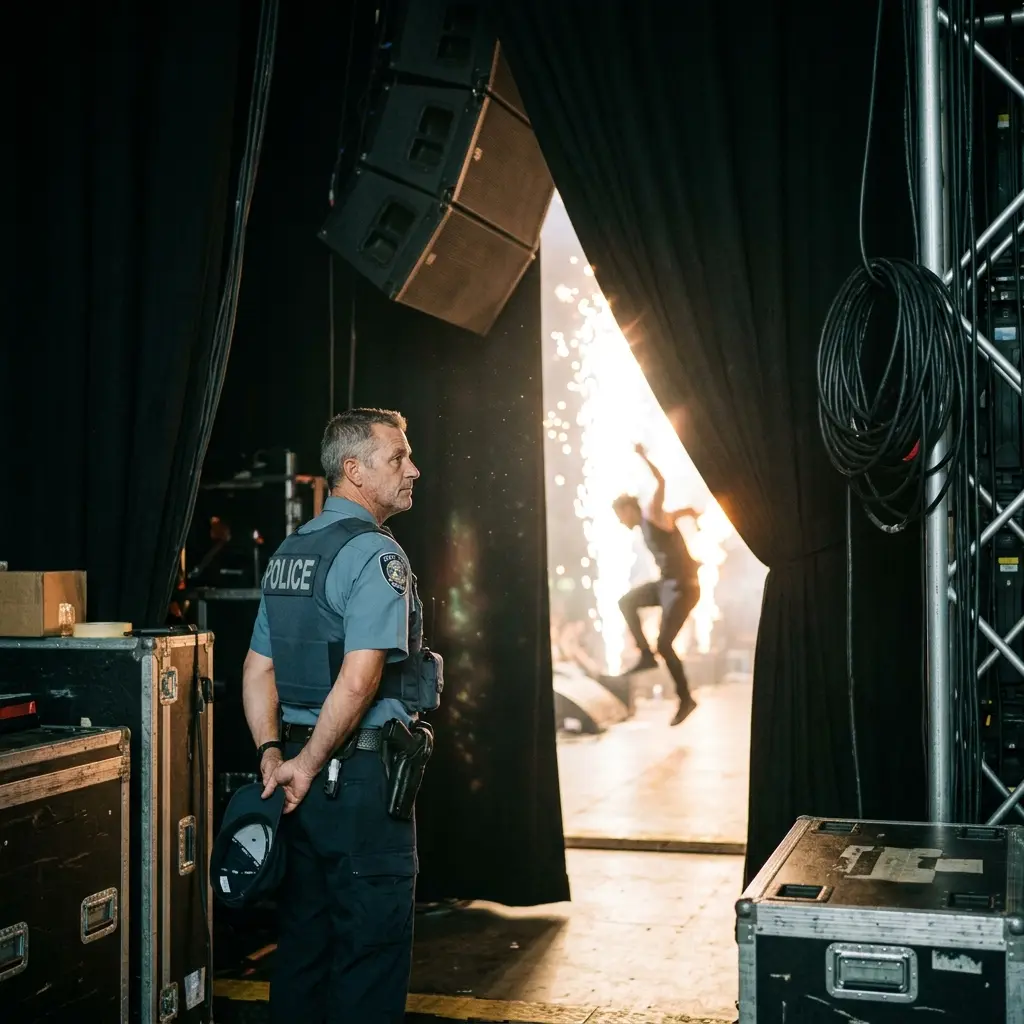
My wife and I grabbed last-minute tickets to see Benson Boone at TD Garden because my daughters already had theirs, and though we weren't sitting together, we wanted “to be there” with them. The seats we ended up with had a limited view of the stage and right next to the pyrotechnics.
So when the fire went up, I waited for a curtain to catch. I scanned for my escape route, the speaker arrays overhead, and read the crowd. Threat assessment at a pop concert.
If you're a first responder, you recognize that feeling. It barely registers anymore. For me, growing up in a city and then spending a career in law enforcement, that level of awareness is my baseline, just another Wednesday.
What actually got my attention was entirely different.
The Guy Actually Sings
I went in expecting to tolerate the show. I knew a couple of songs. I planned to be present and get through it. Then I watched this young guy work the stage like a maestro guiding an orchestra. The precision. The crowd control. The backflips off the stage. One of my daughters later mentioned that she was impressed he wasn't lip syncing. The guy actually sings with the voice of a freakin’ angel.
At some point during the show, I began thinking about mastery. Because everything happening on that stage that looked effortless wasn't effortless at all. Every backflip that landed clean in front of a packed house happened a thousand times first in an empty gym where nobody was watching.
Nobody wakes up and accidentally becomes talented.
That show was his craft. His art. His reps. And I couldn't help but internalize it and turn it back on my own profession. Why is it that some of us in law enforcement don't approach the job with that same drive toward expertise? You can tell when someone hasn't even read the policies. I know there's a lot to memorize. So are lyrics. So is choreography.
Then the question that actually cuts: He has a team. We get paid less. Does that mean we try less?
I've Been the Guy Who Stopped Trying
I want to answer that honestly, because I've earned the right to say hard things here only by admitting I lived them. There have absolutely been times throughout my career when I let moral injuries and perceptions take over my attitude. I went straight toward negativity, lived in that world, and then went looking for the people who would validate it. I found them, too. You always can.
At the time, it seemed real. I had stopped choosing anything. The job was dictating my mood, my energy, my attitude, and I was responding to whatever it handed me that day.
What pulled me back out was reminding myself who I was and what actually drives me. For me, that turned out to be learning, growing, and mentoring the younger people coming up behind me. Your answer will probably look different. The point is that the answer exists, and the cynicism was covering it up.
Not everything's always going to go your way. That's true. It doesn't mean you give in.
Trained to React, Paid to React
Here's the part I think about often. As first responders, we're trained and rewarded for being reactive. The radio goes off, you go. Something happens, you respond. That wiring keeps people alive, including you. The job requires it, and I'd never argue otherwise.
No one accidentally builds a strong marriage. Nor do they accidentally stay healthy through a twenty-year career of overnight shifts. And certainly no one accidentally becomes a great leader. These things transpire because someone kept making small decisions, over and over, long before anyone noticed the results. The reps nobody sees.
That's designing. Everything else is reacting and calling it life.
Containers: The Real Version, Not the Aspirational One
I want to give you the practical version of this, because "get back in touch with yourself" is easy to say and hard to do. What's been working for me is what I call containers. Protected blocks of time and attention that I've decided in advance belong to something that matters. Because if you don't protect that time, something or someone will take it. Every time.
Lately, for me, three mornings a week, I get up early and do something active: a ruck, a walk, a jog. I've taken note of how those days go, and they are markedly better days. That's worth a container. When my daughter has a recital or a performance, and I can be there, I'm there. I'll be honest with you: as a chief, my schedule gives me flexibility that an officer working the road doesn't always have. I know that, and I'm not pretending otherwise.
Here's the piece that took me longer to learn: the physical containers only fall into place after the mental ones do.
The mental container is the harder build. It's forcing yourself to stop replaying a conversation from the shift. It's giving yourself some peace in your own head, and some grace. Recently, I caught myself going down a negative road in the middle of a conversation. Because of the containers I've built in my brain, I identified it fast, named it out loud, and apologized to the people in the room. I told them, honestly, I'm going negative, and I don't want to anymore.
That's the skill underneath everything. Noticing fast enough that you still have a choice. Benson Boone's backflip is the same skill in a different costume. Notice, correct, get back to center. Thousands of reps of exactly that.
The Gut Check
It's easier to lie to yourself than it is to others. I believe that more every year.
The reactive loop is a comfortable lie because every piece of it is technically true. You are busy. The schedule is packed. The job is hard, and the public in your quiet town doesn't see what you've seen or the long shifts you've pulled because staffing is thin. All of that is real. None of it answers the real question.
So here's what I'd offer: Think back to your first or second year on the job. Take a spoonful of the passion you had then, and mix it with everything you know now. You have more wisdom to impart today than you ever did back then. Becoming cynical is a choice; you still put on that uniform every day for a reason; remind yourself what it is. You can still be dynamic, still be learning, still be reaching for mastery on whatever stage you work.
Then look in the mirror and answer honestly, because you're the easiest person in the world to fool.
What do you actually see?

Host | Maine Responder
I've spent much of my adult life in work that carries responsibility for other people. Along the way, I became less interested in having all the answers and more interested in asking better questions.
Maine Responder is where I work through those questions.
Through conversations, stories, and reflections, I explore leadership, human performance, purpose, and the work that shapes who we become.
I don't claim to have the answers. I'm simply curious enough to keep asking the questions.
If you'd like to think through them with me, welcome.
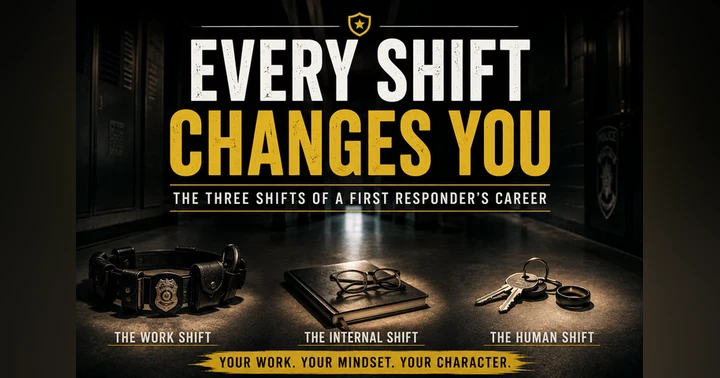
Three Shifts: What Every Call, Every Day, Every Year Is Doing to You