
 Apple Podcasts
 Spotify
 Youtube Music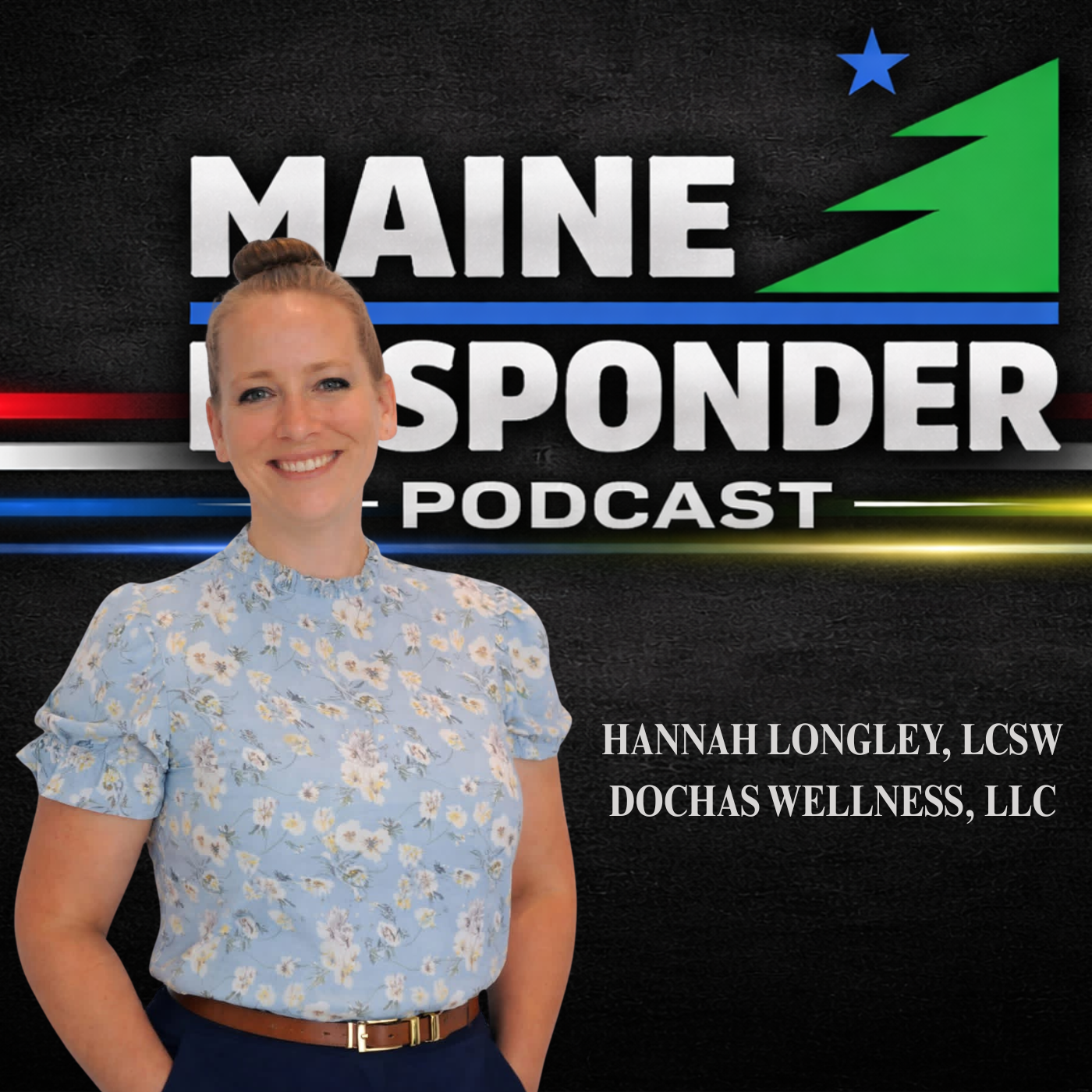
What happens when a single conversation changes the way you view policing, leadership, and wellness?
In this episode, Elliott Moya, Billy Dries, and Ron Lund sit down with Hannah Longley to discuss crisis intervention, peer support, critical incidents, officer wellness, and the cultural shift happening within law enforcement.
The conversation explores how peer support teams help first responders navigate difficult calls, the emotional toll of helping others, the importance of supporting the helpers, and why authentic leadership is changing the way agencies approach wellness.
Hannah also shares her journey working with first responders, building peer support programs, advancing confidentiality protections, and helping agencies create healthier cultures for officers and their families.
Topics include:
• Crisis Intervention Team (CIT) training
• Peer support and critical incident response
• Supporting the helpers
• Officer wellness and resilience
• Leadership and culture change
• First responder families and relationships
• Confidentiality protections for peer support
• Why asking for help is becoming more accepted in policing
Chapters:
00:00 Introduction
03:00 How CIT Changed Our Perspective
06:00 Building Peer Support Teams
09:45 What Peer Support Actually Does
14:00 Helping the Helpers
18:00 When Debriefs Go Wrong
22:00 The Importance of Trust
25:30 The Growth of Peer Support in Maine
30:00 Culture Change in Law Enforcement
36:00 Why Officers Finally Reach Out
41:00 Hannah's Wellness Mission
46:00 Peer Support Confidentiality
53:00 Supporting First Responder Families
57:00 Final Thoughts
Learn More:
Contact information for Hannah Longley can be found in the episode show notes.
Follow Maine Responder Podcast for conversations on leadership, wellness, resilience, and the realities of life behind the uniform.
Hannah Longley, LCSW, owner of DOCHAS WELLNESS, LLC (Hannah@dochaswellness.com ) is a Maine native and licensed clinical social worker with extensive experience in community mental health, crisis response, and supporting first responders. Her background includes work within the mental health crisis system, contracting with the Maine Army National Guard, and prior work with NAMI Maine. She brings a strong, trauma-informed and systems-based approach to her work.
This one hits on policing, wellness, and the human side of the job—for officers, leaders, and families alike.
Elliott: We got a full house here. We got Ron in the house. My man here. And one of my favorite people since I've smartened up and started to realize how policing in different ways is important. One of my favorite people, Hannah Longley. Amazing to have you here. â actually here in person, which is really cool. â Ron and I did an episode not too ago about crisis intervention teams, wellness, kind of that direction that brought us, â really even this podcast to be honest. And that journey, honestly, we say, â this is how it started for us, but it started with Hannah. â And it actually, it started with me being a... a bit of an a-hole and not be, not crisis CIT, which is a, which was a bad attitude. And I'm glad that â I made that shift some point, but I sent an email out randomly to the wrong person. â And then it ended Hannah responding back, this is what you do. â And it's been, honestly, it's been ever since. mean, just to all the learning and progression that I did, I think as a leader and an officer, Yeah, no, it was great. Just that I go back to how we got involved with the CIT process. And then that us into Ernie and crisis cops. And then you â participated in a webinar with us. you brought a whole nother level to the show. Thanks. I actually still remember you sent the email. I said, let's set up a time. Let's talk. was during during COVID and everything was shut down. So we hopped onto Zoom and we started the discussion and we had a CIT class coming up. And I said, why don't you just go and experience it? And so you said, yeah, I'll go and see whether or not it's good for all my guys. And I can't remember it was the second or third day you came in and you're like, I went home and I tried some of this at home. and actually worked. And I was like, yes, yes. Well, you know, if anybody knows, right, you're also a spouse, right? You have a police officer as your husband. And so you know how hardheaded and stubborn we can be at times. So â no, my husband's not at all. I actually I do like to point out that I was I actually married a banker. â true. Yes. Yeah. So he was not early in our marriage. â He was a banker and then transferred over a couple of years into marriage. You brought him to the dark side. I think I did. I think I did. Although I do. I tease him a lot and I'm like, I thought I married for money, but apparently it really was love. I was going to say he would wink you. I'm a banker. I promise. Psych. One of the one of the other things I hope to get into the time that we're talking here is the peer support team. The York County peer support team which you were instrumental in in starting that yeah, and I guess this whole room is part of that, on some Yeah, and Billy right you've gotten pretty heavy into it here more recently Ron I you know, one of the things I want to talk about is like â I think I said this last But I'm like Ron. Do you have to do them all? â You know, yeah, dude, Are you with this stuff? You can be tough. I know I've only done very few. â the ones that I've done is, what a tough crowd, on the, on the chief level. So I don't always get the same response. some of them that I've done that, some officers have been there have been really have felt different and are a little more fulfilling, and that, and that you get that response sometimes and you, see the process working, but there's times where I'm like, bro, you're doing them all. And I just, I just worry like, I just had the really cheesy line of long time listener, first time caller pop into my head because I have listened to all the episodes. You guys are amazing. And I feel like a proud mom when I listen to them. But we actually. If some people had stayed for the second day of the most previous training that I did, we did talk a lot. Sorry, I'm shaming. feel like I shouldn't shame you guys on the podcast. were getting an award for our performance. Yeah, Elliot was getting his awards. It was totally a great... Pressing moments. Great reason. But we talked a lot about the big push now is recognizing the toll that it does take to be there, to be present. And again, I always go back to the statistics where we, know, in our personal lives, the average person experiences two to three critical incidents or traumatic incidents throughout the course of their lifespan. We know for law enforcement officers and the numbers are creeping up depending on where you're looking for the statistics, but it's between 170 and 200 critical incidents throughout the course of a 20 to 25 year career, depending on where you work and all of that. And then you add onto it when you do peer support, you're taking on. in a secondary capacity, other people's critical incidents also. So it is a lot. And so the big push and what we talked a lot about is how do we help the helpers? How do we make sure that everyone's taken care of? And I think knowing that's one of the things, I may, when I knew Hannah was coming on with us, one of the topics that I was hoping that we would be able to cover is exactly that, the peer support team and what is done. for those that are doing it. have some guilt because I'm not able to respond to those debriefs as often as I'd like at that meeting. You asked how many people have done so many numbers and I didn't raise my hand and Hannah's waiting. Hannah's waiting. I'm like, okay, how many people have done one? And I've raised my hand and she's like, what? And yeah, I've got some guilt in that, but but it's what we can do with our time and how else can we provide support. So that's one thing that I wanted to cover and talk about is the support for our team, â for those that are the caregivers, the caregivers, â advice and tracks that we can down to help them. â And I think one of the things that we can do for just people that don't know what peer support does, do you want to explain what the team does and? what the functions of the team approach is? Yeah, so we use and what we adopted and you're a team in what some of the teams across the state are doing and we're moving in that direction is we adopted the ICISF model. So the International Critical Incident Stress Foundation model, which is a multiprong approach. â There are adaptions and there are different models out there and so I always want to put that out there that I am not someone who says it has to be this way, it has to be only this way because we're all so unique and different that different models and different styles are going to work for different folks. â And so I know that the team has really done a wonderful job incorporating all of that into it. But the peer support model really looks at how do we support individuals from people who know what they're going through. â It's not necessarily the been there, done that, have the t-shirt, but it is to a certain extent. There is a familiarity with the situations that people face, and there's a familiarity with the culture, but it's also, it's a way to normalize the acutely abnormal situations that you guys face on a regular basis. â the acute responsibility and all. And again, it's a way to divert. I am a therapist. I'm a licensed therapist. I do therapy also. â I think therapy is good, but not everyone needs therapy. And so it is a â lower, I don't wanna say a lower level because in some cases it's far more impactful than anything I can do from a clinician standpoint of just normalizing our common stress reactions and responses. how hard it is, the impact of the job, both when you're at work, but then also when you're at home, and just provide a level of support that is so incredibly impactful and powerful. And so the team offers it on an individual basis, and then also in a group basis. Yeah, we've had a lot of success over the years with the groups, because typically this isn't just one person going through. a shitty situation. It's a team of people. for me, it's rewarding because â one, I have an administrator that allows me to go out â â share in their healing. â it's something that â take pride in, â we feel that we're able to teach people to â with those stressors and give them ideas and â what to do, what not to do type of thing after a critical incident. I always kind of compare it to rec marches. I think you were talking, I feel like a little bit of a fan girl right now because I really do listen to all of your episodes. â But in rec marches, particularly in group rec marches, if your load gets too heavy for a period of time and you're starting to struggle, you can hand things off to those who are next to you. to help to carry it for a period of time. They can pass you water. They can give you words of encouragement. And that is what we know helps to get people through a really hard time. And again, a Ruck March is hard. It's a lot to carry. And so it's not that anyone's taking your load and carrying it for the entire 15 miles, if that's what you're doing. But they can carry it for a period of time and lighten your load for a little bit. give you some words of encouragement, give you things that can help to, you know, rehydrate you. They can give you better socks. They, you know, there's a lot of things, small things that we can do to support you to get through that moment of struggle and get you to the finish line. I don't I don't know why, but like I sometimes â struggle with â I did one that just sticks in head. It was a big one in Maine. And I was like, I don't know if I can do this again. I was like, damn, that was a. It was a banger and I don't mean that in a good way. at first it was kind of slow and then when people opened up, was like, whoo. That drive home for me was, it was heavy. And I was like, should I be doing this? there was, there was a lot of weight to it. when you process it and everything, you were like, that was good. And it was good. And when I, and when you take that moment to say, okay, This is what happened, in my own, I have that conversation with myself, I guess. I was like, that was good. There was a lot of good that came out of there. There was a lot of, I'll say conversation that was super powerful so I could see the value. My issue was the first time I ever went to a peer support. And I don't know, Ron, were you there for that? The one that we did for admin? This was way back. I don't even know. I don't think you've ever sat in on what. sat in as a participant and not as a... Yeah, this is one that I sat in as participant. â yes, yes we did. We had a bad boating crash in our community. Yeah, and I didn't want to go. I didn't feel like I needed to, but â one of our people did and I wanted to be supportive. And I wanted to sit outside the circle. and it became a thing. And, he almost threw punches. It wasn't that bad, but I was like, no, I want to just, I want to, like in my mind, I wanted to just kind of be an observer and just be there. And, and the person who was running it was a jerk. Just straight up. Right. You know, I don't even, I don't even know that person's name, but it was basically like, all right, well, if you're not going to sit in the circle, we're going to move our chairs around you. Not like I was in the center of the circle, but we're going to make the circle work. And I got, was so mad and maybe I was childish, like whatever I now thinking about it. All right. I was being a child about it. I didn't want to be there, but one of the things that I think is, is that avoids that now, is it's kind of broken up right by rank Yeah. Admit not allowed in the room. Basically, unless you were actually on the scene participating. in the active act. Yeah. And I think for us, we we've decided as a team, it depends on the agency. You know, we we've had a couple of agencies that, know, â their administration is part of the team. You know, there there is no, you know, just like â heaven forbid we ever have to go through this. â You know. Elliott's going to be there no matter what. because he's part of our team and we all heal and, you know, go through things together and try and support one another. But there are some places, some agencies that, you know, admin just cannot be in that room. And for us, it's I think it's beneficial because we have so many different team members. They kind of will give the team leader. a heads up of like, hey, this one's okay. And we try to have a lot of conversations and that's where I'm like, I don't care what model you use, but if you're going to do it, make sure it's research based, it's evidence based. It's not just something that we wing. Like it's something that's really important because when one goes bad, it can cause a significant amount of damage for the individuals who participated in it. So use the model. We do a very thorough â assessment, â we call it the recon. And so that is a critical part of the model that we use and that needs to be implemented. â We try and provide as much â and try and provide as much information and proactive control of the environment as possible. â And you're right, you guys have you guys have an anomaly of a department, I will say, you know, I in a good way. â But you do have that closeness and that connection and Not every department is that way. â There's not always the same level trust. â But I know â you are of also the chief's team â where we have â when Chip the president, he pushed forward for that because we had a huge amount of research that came out â that the higher you go and the more at risk you are. â for suicidality, which, you know, that's a big thing that we want to proactively address. â But also just it's different when you go higher in rank and it's it's more isolating in the fact that ultimately the buck starts stops with you. And so you have to make different decisions. You have different worries. You have different concerns. And so making sure that we're addressing that. And so collectively as a group, we try to, again, be proactive and mindful so that like for me in my head, when I'm thinking about that, I would have already had the room set up before you came in. So it would have been clear where I expected you to sit, whether or not you'd follow it. I mean, it makes it pretty there's some pretty good social cues at that point of what to do. But then also having the conversations and the whole power of the group peer debrief is that. you guys heal each other. You provide aspects of the situation and details that help to fill in the blanks because by nature either partially we're humans but also partially by what we've all been exposed to over the years we fill in the blanks and we never fill in the blanks with the least concerning of the situations. We always go to the worst case scenarios. And so having, know, bringing all those folks in. so I'm just thinking about like proactively, how could we have provided a better environment? I say the royal we because oftentimes it's clinicians that that lead them. We're big on making sure it's peers that lead the debriefs. But how could we have proactively address that in that moment? Yeah. And, know, so one of the things for that one that I went through also, which is why I think I brought up the rank structure, you know, is that was it. a huge circle. There was a lot of people there. so for me, I think I was like, who are these people? Yeah. and I think I kind of, you know, clammed up as a result. And it just, yeah, it just didn't, that was my first one. I was like, I will never do this again. Well, I'll, I'll, I'll wrap myself out. I always say 97 % of the time I'm an absolute delight and I'm wonderful. 3 % of the time I got a little bit of an edge to me. â and it only pertains to specific situations and circumstances largely involving my kids and my husband, but also involving making sure we're doing the best we can when we are supporting someone. Because again, we can do some significant damage and you, there was an administrative one and I think Ron and Elliot, I think you guys were facilitating it and I was present as the mental health clinician and someone stated that they belonged in a debrief. and put themselves, entered midway through, put themselves into it. I got snappy and I was like, nope, And I was a lot more. assertive then maybe I typically am in certain situations but you could see just the whole group shut down because if it's not the right people in there then it's not helpful. Yeah I guess if I had had you know from the experience I have the ones I've been through in the York County team far different. I think I would have sat there accepted it and probably supported it after that it was just â what do we call it? A good old classic shit show. The first one that I went to. And then that was the taste in my mouth that was left, you know? So it took me a long time to, it probably impacted my CIT, all that stuff that I was kind of like, yeah, whatever, you know, may have been based off of that moment. And I don't know, it was impactful enough that I bring it up a lot. You know, every time we have these conversations, I'm like, yeah, that time, er. And so, at least you have the ability to see the good and the bad. like, the comparisons. I do feel like we kind of graced over the helping the helpers. And I just, that popped into my head. And I was like, poor Billy. I view that in all honesty. Like, I never, I was kind of surprised when you said you've only done one. Because I view you as the primary point of contact for helping the helpers. in what you're able to teach, what you're able to coach, what you're able to provide for support for them. And I think that that's an important part of your support too. Wow. Yeah. Sorry, I just made it awkward. You gonna cry? Yeah, I mean I could cry. Let it out. And I think that's joining the peer support team, that kind of was like what I had envisioned. I'm like, you know what? I've got a lot of skills in my toolbox for what I do for myself and my small little group. I increase my impact by joining this team. whether it's just the team or those that the team service. it kind of, yeah, I want to keep kind of moving in that direction and trying to be a part of the team and â hold that space for them. And it's just matter of trying to get that component laid in. Cause I think we're all still very much, â I got this. It's my ruck. I'm going keep filling it up. And I got it even as our team. mean, you can look around the room when we're in those, those classes and meetings, they're all very strong people. They're all very strong officers. They're all very strong individuals. And we give that advice to open up, share and work with each other. But a lot of times we just say, Nope, I got it. And that includes to the point of those that are able to Yep, I'm available. There's quite a few that are constantly there. And like I said, I do, have that guilt of I'm just not available. Hannah, the only reason why we have this team is because of you. And I hope you understand that and know that Southern Maine law enforcement is much better equipped to deal with the shit shows because of you. Absolutely. Yeah. That might make me cry now. â in just the the that you taught us, â you know, we're able go help â try and heal some people that are struggling, give them tools to, you know, get by so Next time they can also share it with, â you know, their teammates or whatnot. And but then we're really good about as a team checking in on each other. You know, we we normally will stay 20 minutes after debrief and just, you know, kind of circle up and you good. What do you need? â Or if sometimes we are â up in northern Maine, we'll take that time on the drive back to. â you know, checking with our supports and, know, know a lot of times, â you know, don't share what happened, but a lot of times I share with, you know, Elliot's, my guy, â allows to go to these and be part of it. And â I out and I'm like, â that one was heavy. And this is how I'm feeling. And, know, it's great because, you know, we're able to talk it through, â you sometimes, â you know, if it's. something really bad that I'm struggling with, I'm calling you and saying, hey, can you help? So thank you. And I love the way you all communicate. I actually asked to get removed from the group chat once. My big thing is that nothing can ever be exist solely on one person. It's not sustainable that way. It has to be a culture shift. It has to be a buy in. It has to be a team. â And so once you guys were all self-sufficient, like the mama bird, I was like, fly out of the nest. And they would not remove me from the group chat. I do, I love, again, the mom and me loves to see how much you guys support each other and cheer each other on and celebrate every milestone that everyone has. And I feel like that's something. â I do call you guys out as a community sometimes you circle in on each other and you don't humanize yourselves enough. â But just, you know, just how amazing and like human beings you all are and just the love and the empathy and the support. But you guys celebrate every babies, promotions, birthdays, â all of that sort of stuff. And it's just it's beautiful. It's a beautiful community you guys have created. You're proud mama. I am. I am. It's amazing, truly, do you know the impact, it's probably huge, the impact that you've had it's pretty it's pretty cool stuff, you know, and and Billy, to go back to your thing, I mean, I get it, you know, I always I always go back and say, wish I had done more in the military or I wish I had stayed. Like I have a piece of what I think is unfinished business, you know, in the military. I loved it. You know, that's where I think I found camaraderie. I always tried to compare the camaraderie there. So you're still in it. You still got time, you're doing the work, you do a lot, at the PD. So just hang on there. I think you're, you know, it'll, it'll happen. Or sometimes the, the one-on-ones. â that got this is what would work for me. I just need a call from somebody. I need to process this. I would like to just start with a conversation. And then, I do a of reflecting enough and I'm â an over thinker and I get stuck in my head sometimes, but that one-on-one I think is just so, powerful. Yeah, impactful. agree. just to be able to check in on somebody and just have a quick conversation. â mean, it makes it, it's going to sound corny, but it makes you feel loved. Right. Yeah. Even if you're like, I don't know that person and I they're calling me because somebody, somebody thought enough to say, Hey, reach out to this guy, â check in on him. â if people don't see that, that's interesting. So I guess I want to go into a little bit like, What do you see, Hannah, especially for you, since you started this, â there been a culture shift maybe that wall was up more is this more accepted since the inception of the team? Are people reaching out? Does it feel authentic? Does it feel like a checkbox thing? Does that even matter? I think there are some departments where the officers say, you know, this is just a checkbox. And I'm like, listen, if they just wanted a checkbox, they wouldn't pick me to come. And they're like, that's true, because you're going to tell them whatever it is that needs telling, â which I joke. probably one of the most divisive characters in law enforcement in the state of Maine, â for good, I think, good reasons. â But I think some people were slowly moving away from them feeling like their departments are just doing a checkbox. And again, that's when you do it correctly and authentically. But that takes time. It takes trust. It takes building that rapport and just the culture shift in it â There are still pockets â of folks who have the old-school suck it up. It's fine. You'll get through it But I think we're seeing â shift away from that â the fact that â we had I think that we had one big department in York County And at first it was it was a battle to get us in there â and to, know, when the team was first getting off and running, it was a battle. then within a year, literally anything that happened, they were like, OK, we're ready for our debrief now. And they would just reach out. We're ready for our debrief now. And some of the times we were like, â OK. But but you're right. And I think that it it has shifted. And I think that I'm going to call you. Chip Ramsey in Cumberland and Mark Leonard up in VZ. I call him my, he's the emperor of Penobscot County for anyone who's not aware of that. â But the three of you, I think, has expanded, but you are my three solid foundations. The three kings? Yes, yes. So he's not the emperor anymore, he's part of the three kings. â So the three of you have done a great job and have I don't even really nudge you guys anymore. But even when I was saying, did you hear about what happened? I'm trying to think of, to some community, do you hear what happened? And sometimes you guys would and sometimes you wouldn't. I'd use you geographically because you're throughout the state. I'd hey, can you just, do you know so and so? Can you just reach out to them and just check in on them? That's a lot for them to carry as a leader. And you guys just slowly reaching out and being willing to do that. â I think that that has started to break down a lot of walls because it's made it okay. You guys from the top acknowledging this is hard. You guys see things. â We've already outed my husband as a police officer, but my husband had something that happened. He goes, normal people aren't supposed to see that. But acknowledging like. You're not necessarily normal just because of what you've been exposed to, but acknowledging that those aren't common things that most people experience on a monthly basis or, and and I think you guys have done a beautiful job kind of pushing that forward, normalizing it, making it OK for leaders to start to just get that support and at least be like, I'm not alone in this. And you just said it leaders. So our leadership, all those three kings that you just mentioned all have accepted, hey, I don't know everything. And that's tough for an administrator. You know, a lot of times they've been in the business for 30 or 40 years. And, you know, they just think they know it all they've seen it all they have every answer or, you know, and I think now part of the culture shift has been to is that our younger officers coming into the profession, they demand this type of treatment, they demand the respect and it's it's great to see. And for me, you know, I think, yeah, I'm gonna say probably the past five years that that culture shift has done a 180 from, the suck it up buttercup conversations to, us taking care of one another and I believe that it's only gonna get better. Absolutely, absolutely. And I will say â we know more, â do more. â we have in the last, I'd say decade, â a huge explosion of research â just acknowledgement, understanding â â happens, what happens to the brain and the body and the impacts of all of that. â And again, when we know better, we do better. And I think that we are starting to see that. â I will say, you know, I started working with first responders. I joke before it was cool. â I just have been doing it for so long at this point. And, you know, 15, 16 years ago, my phone number, even 10 years ago, my phone number would like quietly get passed around like, â you're a hard time here. Call this lady, like call her, talk to her. she's gonna have some good ideas and she'll get you where you need to go. Because the stigma was so big. â I won't say what department it was, but I did have one department where they weren't necessarily to the point where everyone else is. And I feel so bad for the last kid who called. Am I allowed to swear? I'm going to out myself that. So in this one department, I had like five or six of them call me within a week. less than a week, like in a very short period of time, because they were just quietly passing around. And the last kid who calls me, if you're under 30 year kid, sorry. But this last kid who calls me goes, know that we're a profession that doesn't like to ask for help and doesn't like to show weakness. And I said, all you motherfuckers do, you just don't tell each other that. And so it becomes this big secret, but it's not. And he's like, well, I did get your number from a couple other people. And I said, why do you think they had my number? And so again, it's just been this slowly coming out of the darkness and people just acknowledging it. It's hard. This is where again, I challenge you guys, you don't always humanize yourself outside. And again, speaks volumes to who you are because you've got to trust. You know, that's the big thing is being able to trust that I've got these numbers. Am I gonna dial this phone number and who am I gonna get on that other side? you've just been, you've been, at least for me, somebody that I know, I can trust 100%. So that's key and you're right. it's gotten a lot cooler now. Everybody wants to work with first responders now. â In a I'm like, wow, we're that broken? â Now there's wave of new social workers coming in. It's weird. They try and tell me and give me training, and I'm like, â I'm going listen politely, but sometimes I want to be like, I was doing this when you were still in high school, my friend. â But OK. Because I realize how cool. how cool it got to do all of this. And I'm like, what? I need a special certificate. No, I'm not getting a special certification. so like with that said, can you go into just kind of what, you're up to now? â So â I think â I have since January, I started my own LLC. It's called DoHas Wellness. â DoHas, I'm going to spell it out because most people â can't pronounce it. It's D-O-C-H-A-S. I come from a very Irish Catholic family. It's the Irish word for hope and optimism about the future. â So I intentionally chose my name. So it was warm and fuzzy, but none of the first responders would know it was warm and fuzzy. since I started it, I, I, I get to do everything I'm super passionate about. Uh, and so that has included ongoing work legislatively. Uh, we did just get, um, LD 882, uh, passed here in the state of Maine, which expands confidentiality for peer support group and individual, but particularly for groups so that it The confidentiality is protected â group interventions that everyone is protected in there and can't be compelled to testify against anyone else. â I've been able to continue to do that. I have federal stuff that I â FOP. I poke at them all the time and I'm like, hey, hey, hey, this is what I want to see. â I have I do trainings. I still continue to do trainings. â I'm still a member of the International Critical Incident Stress Foundation and an approved instructor through them. â still and then I get to do a whole bunch of clinical work. So I have some individual clients that I see. I'm still doing critical incident responses. I have some departments that are contracting with me â for wellness visits or trainings or just going on a ride along again. It doesn't have to be formal therapy like. I started my career back where I was doing crisis work. And so I just hop in a cruiser because we're going to mental health calls. And â doing that, it became beneficial for the officers. â I can do that. I do a lot of suicide prevention work with â different populations in raising putting systems in place â and structures in place. I got a lot going on, but what's amazing is everything that I'm so passionate about, I get to focus in on now. â Does it feel like work? Some days, yes. Some days, yes. yes and no. mean, feels like I'm passion driven, which is so nice. My grandpa always said, have to go to work every day as an adult, so make sure you pick something you really love. Well, I get to pick everything I really love now. And I can say no to things. And I'm like, I'm not that passionate about it. â That's cool. That's cool. So the confidentiality thing, that piece â with peer support, right? Yeah. That kind of became a big thing recently. What was it? Maybe a year plus? So you mentioned that in the work that you're doing. What is that exactly? Can you kind of explain So one, in the state of Maine, we had already established the legal protection for under state statute for confidentiality within group and individual. It initially was peer, one-on-one individual peer support, and then it expanded out to the group support. It never specifically stated that it protected everyone who was in there from being compelled to testify. And unfortunately, there was a case in Portland, Oregon. in Boston. And then I feel like there was one in Washington state also, but I'm not. But I feel like there were three big lawsuits that ended up being filed. Boston was the one that grabbed all of our attentions because it was the closest to it. When I was reading through the case, I was like, â well, they didn't they didn't do the appropriate recon and the appropriate team selection and group selection. They didn't have they didn't have a clinician in the room. So there was a lot of things where I could look at from â an evidence-based, like when we implement a model with evidence-based fidelity, then we want to make sure that we're doing it correctly. And so with that, they also had a different state statute that they were protected from confidentiality because they went out on child protective calls and mental health calls. So that HIPAA protection. Again, we had already established it in the state of Maine that it was protected. It was confidentially protected. â in that situation, what ended up happening is that it wasn't the individuals who were â it. â was, I was sitting next to Billy and I was being asked questions and I said, well, during the debrief, Billy said, â then Billy was compelled to testify. And so this was a way to address it and say very specifically. â And intentionally that everyone who is there and present in that debrief has the protection. Yeah, there was a little bit of an outcry after that. I think I think we even, we even heard some people saying we're not we're not sending it. Yeah. It was a really strong â response. So â that's great that there's still attention. Yeah. And forward movement on that. One of the things I thought would be helpful just to, you know, our two listeners out there. I think we've established there's more than two. These two always say that, our two listeners. So I go with it every opportunity I get. Well, then whenever I hear it, I always say like, who's listening other than me? As a spouse, any advice you can give for the partner that is â going something or struggling at any words of encouragement or â things might be able to recommend to that, â that one at home that wants to be there in support when, â know, their responder is just shutting down and just â wants be left alone and not forget and talk about anything. â Yeah, I I think it depends on the situation. So I always want to start it with that. It's â And I want to validate is so hard being married to a first responder. And I say that with love. I've been with my husband for 20, almost 22 years now. It's been it's been a long road. went from the whole bait and switch like the banker to the the cop. You know, we've been through we've been through a lot together. And I will say one of the biggest challenges is how fiercely independent you have to be in order to survive. but also how much you have to depend on other people. Particularly, mean, for me, I was working in crisis and doing this work, but then also I was supervising a large crisis program that's 24 hours, 24 seven and on call and all of that when my husband made the career switch. And so I needed to rely on grandparents to help to transport. I bought them all their own car seats for my kids so that we made sure that we had that covered. â And so it's one of those, everyone says you have to be fiercely independent. You have to count on them getting called in. You have to be prepared to spend holidays on your own and just be flexible with how you celebrate it. But you also have to have a good support system and a good team behind you. â Because no one really gets it. I remember my husband works for Waterville, Ayla Reynolds. â That poor baby went missing right before Christmas. And my husband was gone, was just gone leading up to Christmas. And I was complaining to one of my girlfriends and she goes, â I know. â husband keeps going to all these Christmas parties and so he's coming home so late at night â it's so annoying. We have so much we have to get done. And I'm like, my husband's out searching for a missing baby â sleeping at the police station. â It's not that it's not the same. I thank you for trying to have empathy, but no, your husband doing that is not the same. They have there's been a number of different situations that have happened and it goes out on the community scanner page and people will take screenshots and send it to me and be like, is Jason OK? Like what happened? Like what's going on? Is Jason? You know, is he is he hurt? And I'm like, I have no idea, because when they're in an active critical incident, they're. that he can't call me. Like, I don't want him to call me. I want him to focus on what he has to do and staying safe and keeping everyone else safe. But then you get bombarded with all of that. And so it gets really weird. Like, no one really fully understands the stress of sitting home and just wondering. And so be fiercely independent, but also know you have a whole team behind you. And that it's okay to say that it's super hard. We, you know, I'm not sure what the police, it's been a few years since my husband was at the academy, but when he went through, they were talking about like, be aware of this for them and that for me, for them and me being me. I know this is shocking for everyone, but I raised my hand and I said, well, what supports are out there for us? And one of the converse was like, â I think there's EAP. And I said, nope, EAP is going to be available to them. what's available for us and they were like, I don't know. And so we made our own little group. We used to call ourselves the Real Housewives of Waterville. Our kids were older so we can't get together as much, but we used to try and get together for dinner as much as possible. Whoever's husband wasn't working, you were in charge of all the kids. Good luck to you. But, you know, really rallying around that whole support network. And just finding your people finding people who get it finding people who understand I know that your wife is a huge I I I do want to state I'm gonna take a little squirrel moment â As you guys have been talking about the cold plunges. No one has openly acknowledged the fact that Becca outlasted some people in the room in her cold plunge I Don't know if that she still has the record, but that has always stuck in my head that your wife was that tough. Yeah, cold plunges for me. Interesting. Yeah, no she was. But to me that is the epitome of, I joke, when people want to get under the skin of officers they threaten their wives. And I'm always like, good luck. You think that where their Achilles heel, where their friggin' So good luck. Yeah, that no, that is true. And the fiercely independent part. mean, I see that in my own relationship. mean, I, you know, I'm grateful. Amen. â â in moments of weakness, she been my my strength many times. â hope I hope everybody has that, you know, or can find that at point. So. â I don't know if that answered your question. It did. Okay. I'm glad you talked about the the wives group because you know a lot of times â just from a First responder aspect a lot of times, you know We come home after a bad day, know, we really don't care about what's for dinner We don't care about picking out, a particular wallpaper for you know the renovation and â so There is something they've done research now, like our willpower and our decision making capabilities and all of that. It's like any other muscle. And so you can get fatigue with it. And that can be really difficult in a marriage because, you know, if you're making difficult decisions all day long, you don't care what you're going to have for dinner. I will be honest in my relationship, that is usually me. My husband will be like, what are we having for dinner? And I'm like, I don't know. What are you cooking? Something I don't have to cook and I don't have to shop for. But understanding that when you are making those critical life or death decisions and those split second decisions, it is hard to care what color the paint is going to be. It's hard to care what you're going to have for dinner. It's hard to, not that it's not important. because it's important to the person that you love and you care about, but you don't have the ability in that moment because it's just you're worn out, you're tired, your brain is tired. â And so that's where a lot of conflict. I always joke that I've had way more cops reach out or their wives reach out because they're fighting about silly things like what are we going to have for dinner and what's this and what's that. â And that starts to cause these huge conflicts. And so that's what I just always say is be honest about it. And learn to prioritize. There are things that I don't care whether, like if my husband's like, I could care less. My husband has never cared what color we paint our house, what the curtains look like. He does not care about any of that. And that's okay because that's just not where his importance is. But I need to prioritize when I do need him to have input on it. I need to have some sort of agreement with it. So if I am going to paint, I need you to have an agreement that no matter what I choose, you don't say anything bad about it. But again, that prioritization of I really need your help with this and I need to I need to communicate as much as they need to communicate. Eric, my husband needs to communicate. He needs to communicate when he's at that limit. And I need to communicate when it is a priority for me, because my priorities aren't going to be the same as his. Right. That's one thing that I've learned, just to say, I need a minute. Sometimes it doesn't come out like sweet, but I think, Becca understands, and vice versa. so has helped, you know, so I don't know where I learned it and I'm gonna, if I was a betting man, it was from you Hannah, exactly, â exactly. â But. â But that's it. You know, it's communication. know, Billy, you and I have talked about communication. it's â it makes things good. It makes things bad. Right. Lack of makes it makes it bad. But those little things, simple little things, if you can just remember, like I just I need a minute. â know, â and think now, after so many years, she she can just sense it. Yeah. She says, she senses by the way you put your phone or wallet or key down on the Counter of like he needs a minute. Yeah. Yeah. â This conversation has been â I knew it was gonna It's gonna be a banger. there's so much more to talk about. Yeah. Yeah. â When you talking earlier to about â the spouses and. â â and I'd love to get your opinion on, â why our professions, â being a responder divorce is so high things like that. Not today. â I just want to wrap up today for of just, â we love you. â Thank you so much â no, you expanded, â the, way we in our community and it really shows. So we love you and thank you for that. I'm gonna add off of that as well. I didn't come back to law enforcement until after this introduction. You were working with Hannah for a little bit and I said, that's, I could get into that. That sounds like a great idea of how we're gonna approach law enforcement and the public and serving ourselves too, so. I say thank you very much, because that brought me back. Because I knew that you were out and then you came back. So it's pretty cool to get to that level, to this level here and know the intricacies and how it all started. So appreciate it. Appreciate you. You've done a lot of great work and more work to come, I'm sure. And we're listening, clearly. Yeah. â That's important. just feel like it's gonna get even more impactful as time goes. And I hope someone listens to this and maybe changes their mindset on something. â it's â how police, wellness, think â everything, we didn't it directly, but it was all covered, I guess, in some sense here. â And I appreciate â I think I sent you a text recently. You're going through some changes. â And, â and I meant it. Like, I was like, you, you were the one that, that had so much impact on me that I was done. And not to get on a whole nother rant, but I was, I was like, I'm done with law enforcement. It's just not my, it's not what I thought it was going to be. was, and all of a sudden, between, between an officer talking about CIT, I mean, all these things fell into place and it like rejuvenated me. there's more, we can do something here. we can be different, which is weird. I wish I didn't have to say different, but we could do this in a different way. And it was at a perfect time, COVID and all that, it was in a time that was demanding that change and that shift. And I'm just grateful that you were there to lead us through it. And grateful that I wasn't so hard headed to not listen. Yeah, that's not often, that doesn't happen often. So thank you so much Hannah. Any last words from you? Anything you want to say? Can people get a hold of you a certain way Yeah, absolutely. I, â my webpage is almost up and running. â if have show notes, â we can put contact information in there for my email and for my phone number. â is there show notes? There is, Okay, great. So we can put that in the show notes if anyone has any questions. And what I want to encourage is that it's not an all or nothing thing. And what I tell everyone is again, 97 % of the time, I think I'm delightful. 3 % of the time, I grade on people's nerves and that is completely fine. â I encourage people to reach out just like you did. Just ask the questions. Tell me about this. And it doesn't have to be me. I want to make sure we find people that are the right fit for departments. that are right, the right fit for their people, for their culture, for their area. There are so many amazing resources that are out there. So just, if you have a question and just say, know, call me up or send me an email and be like, I heard this. This is my question, or I don't even know what my question is, but this is where I'm sitting. Because I think that actually might have been yours like I heard about CIT, but I don't I don't even know what like I don't even know that sounds like it and so Even if that's just the question Let's figure out what works best and figure out how we can best support because the thing that again as you guys don't humanize Yourselves if we don't take care of you How do can we expect you to take care of anyone else because we ask a lot of you? Yeah, yeah putting on your own oxygen mask first â And so just making sure that it's okay. It's okay to reach out and to say I don't I don't know but I want to know something. Yep, absolutely Awesome. Well Hannah, thank you so much for doing this this is gonna be I think really helpful to a lot of people and I Think on that note, we'll sign off and â as we always say everybody out there. Stay safe